Synopsis
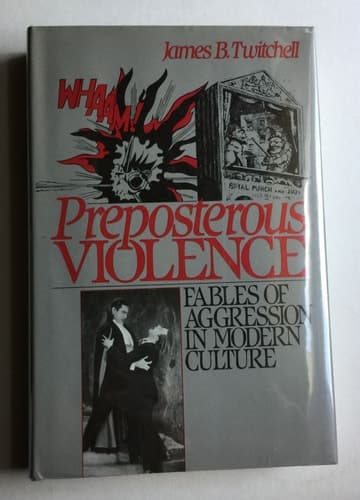
From Friday the 13th movies to pro wrestling, from Stephen King novels to heavy metal music videos--violent imagery saturates our popular culture, reaping enormous profits for its creators, provoking outrage in its critics, and drawing squeals of delight from its consumers. Why do these entertainments find such huge audiences? Seeking to understand the phenomenon, rather than to condemn or defend it, James B. Twitchell offers a lively look at some modern "fables of aggression" and their historical precursors.
Twitchell begins the story in the eighteenth and nineteenth centuries, when the "cheap thrills" available to mass audiences included bull-baiting and other blood sports, Punch-and-Judy shows, penny dreadfuls, and the illustrations of William Hogarth. In our own century, he finds the equivalents of these diversions in everything from the infamous EC comic books of the 1950s to recent television programs like The A Team and Masters of the Universe and the latest generation of video games. Twitchell examines a number of key examples in depth and suggests some intriguing reasons for their appeal. Stressing the outrageousness of the violence depicted (it is usually too ridiculous to be taken seriously) and its ritualistic nature (it thrives on repetition), he argues that it serves an important socializing function for its audience of mostly adolescent males. As he notes, adolescence is a stage in life fraught with sexual confusion and anxiety, which often surface as a craving for violent resolutions. The stylized violence of popular entertainments prepares the teenager, he says, "for the anxieties of competition and then of reproduction." Although these violent scenarios might seem to be incitive--and are in a few cases--they serve, for the most part, as cautionary tales. "Boundaries are only known once crossed," Twitchell writes. "Preposterous violence shows what is over the boundary. 'Enough! or Too Much.'"
While the mass media that provide these "fables" are usually blamed for creating stress, for showing "too much," they are, in Twitchell's view, simply fulfilling the wishes of a ready-made audience, and they have been doing so ever since such audiences could afford such diversions. The mass media translate anxieties rather than generate them, he says. "We may not want to acknowledge it," he concludes, "but these myths of preposterous violence are still with us because there is still so much of us unacknowledged in them."
Recommendations
Cram101 Textbook Outlines to Accompany: Frames of Mind, the Theory of Multiple Intelligences, Gardner, 2nd Edition
by Howard E. Gardner
Gardner shares Twitchell's anthropological curiosity about why humans are drawn to certain cultural forms, but he approaches it through cognitive science rather than media criticism. Where Twitchell asks 'why do we crave violent entertainment?', Gardner asks 'what different ways do humans process and understand the world?'—and his framework actually illuminates Twitchell's argument about adolescent male psychology and ritualistic behavior in unexpected ways.
View book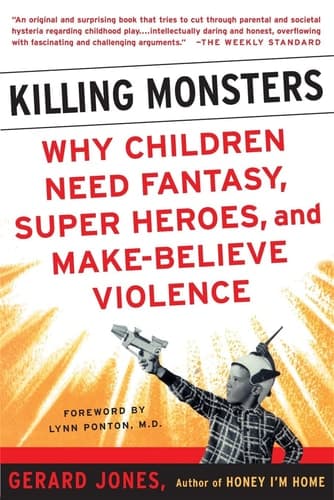
Killing Monsters Our Children's Need For Fantasy, Heroism, and Make-Believe Violence
by Gerard Jones
Jones essentially picks up where Twitchell left off, but with a more personal, memoir-inflected voice—he traces his own childhood consumption of comics and action entertainment alongside his daughter's, making the same argument about healthy psychological development but grounding it in lived experience. If you appreciated Twitchell's defense of 'preposterous violence' as functional rather than harmful, Jones gives you the emotional texture behind that argument.
View book
The Savage Detectives A Novel
by Roberto Bolaño
This is your curve-ball recommendation: a sprawling, digressive novel that seems nothing like Twitchell on the surface, but it's actually obsessed with the same question—why do people consume certain cultural forms, and what do those consumption patterns reveal about desire, anxiety, and identity? Bolaño's young poets chasing literary movements through Mexico City have the same restless, searching energy as Twitchell's adolescent males seeking out violent entertainments, and the novel's structure mirrors the ritualistic repetition Twitchell identifies in horror and action genres.
View book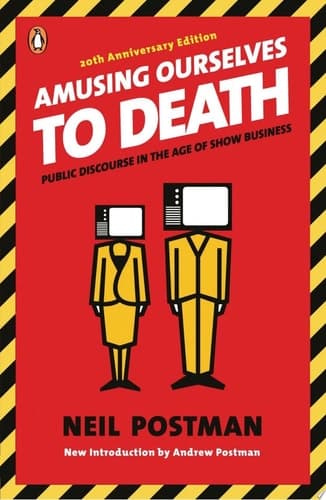
Amusing Ourselves to Death Public Discourse in the Age of Show Business
by Neil Postman
Where Twitchell is sympathetic to mass entertainment's appeal, Postman is its skeptical counterpart—but they're having a conversation across pages. Postman examines how television's form shapes what we think and feel, while Twitchell examines what we actually *want* from entertainment and why. Reading them together creates productive tension: Postman warns about the medium, Twitchell explains the message's psychological necessity.
View bookAbout James B. Twitchell
J
James B. Twitchell
Born 1943
Biography coming soon.
View author page