Problems and Theorems in Analysis. Volume II: Theory of Functions, Zeros, Polynomials, Determinants, Number Theory, Geometry
George PólyaPublished1976
Pages391
Formathardcover
PublisherSpringer
Synopsis
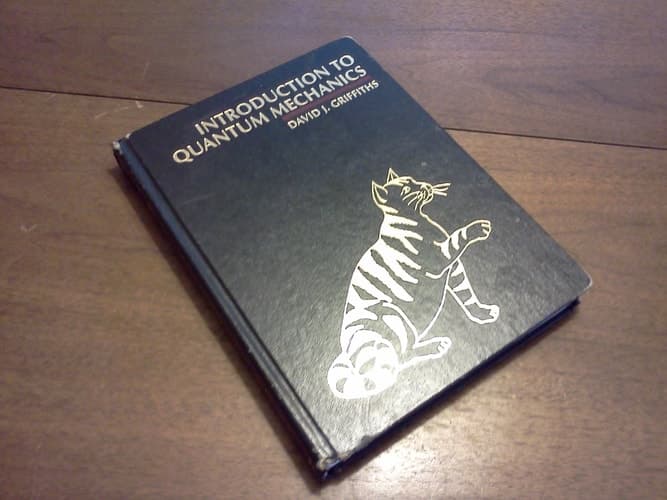
Written by the author of the best-selling E & M text, this text is designed to teach students how to DO quantum mechanics. Part I covers the basic theory; Part II develops approximation schemes and real-world applications. *offers an unusually readable, consistent, and honest discussion of fundamental ideas. *some books allow students to assume that there are no conceptual problems with quantum mechanics, or conceal the interpretative difficulties with abstract language and dogmatic assertions. Griffiths acknowledges, from the beginning, both the difficulty in understanding quantum mechanics, and the controversy surrounding some of the fundamental ideas. *avoids a now-unnecessary historical discussion. Starts immediately with quantum mechanics - the Schr?dinger equation, and its statistical interpretation, is introduced on the second page. *explores several exceptionally up-to-date topics - e.g., adiabatic processes (and a treatment of Berrys phase); Bells theorem; the quantum Zeno paradox; and, where appropriate, cites recent papers in the accessible literature. *contains 315 graded problems offering a wide range of difficulty. **essential, "confidence builders"; ***more difficult and less crucial; ****most difficult - an hour or more; *no stars: good exercise but not essential or difficult.
Recommendations
Generating recommendations…
Our AI is preparing recommendations for Problems and Theorems in Analysis. Volume II: Theory of Functions, Zeros, Polynomials, Determinants, Number Theory, Geometry. This usually takes under a minute.
About George Pólya
G
George Pólya
Born 1942
David Jeffrey Griffiths (born December 5, 1942) is an American physicist and educator. He was on the faculty of Reed College from 1978 through 2009, becoming the Howard Vollum Professor of Science before his retirement. He wrote three highly regarded textbooks for undergraduate physics students. This article is about David Jeffrey Griffiths of Reed College. He is not to be confused with the late physicist David John Griffiths of Oregon State University.
View author page