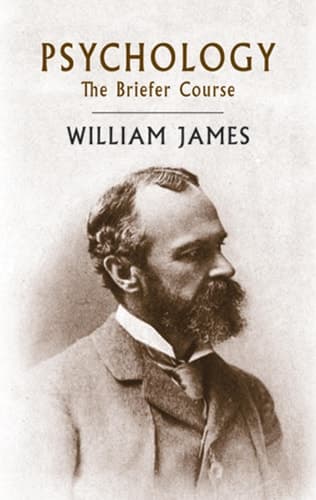
Psychology The Briefer Course
William JamesPublished2001
Pages343
Formatpaperback
PublisherDover Publications
Synopsis
"Written in a rich, vivid style, the Briefer Course examines a wide range of topics: the importance and physical basis of habit; stream of consciousness ( a frame coined by James); self and the sense of personal identity; discrimination and association; the sense of time; memory; perception; imagination; reasoning; emotions compared to instincts; the will and voluntary acts; and a host of other subjects. (The book's long-outdated first nine chapters, dealing with such sensory processes as vision, hearing, and touch, have been omitted from this edition.) An enormous amount of what James wrote in the fledging days of psychology is still true, relevant, and thought-provoking today." -- Back cover.
Recommendations
The Principles of Psychology
by William James
Wait—I know what you're thinking. But hear me out: you've just read James's *condensed* version, and the full *Principles* (1890) is where he really lets himself breathe. He explores consciousness with the same vivid, conversational style but with far more depth on emotion, habit formation, and the self—it's like watching a master painter add layers to a sketch you already admire.
View book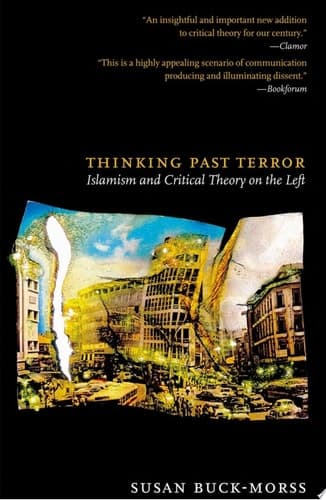
Thinking Past Terror Islamism and Critical Theory on the Left
by Susan Buck-Morss
Kahneman picks up where James left off—literally. He takes James's observations about reasoning, judgment, and the will and shows you how modern cognitive science has proven some of James's hunches while overturning others. You'll recognize James's intellectual DNA throughout, but Kahneman writes with the precision of someone who's spent decades testing these ideas in laboratories.
View book
The Struggle for Life A Companion to William James's The Varieties of Religious Experience
by Donald Capps
Another James work, but this one's his masterpiece—a psychological investigation of mysticism, conversion, and spiritual experience that reads more like philosophy meets memoir meets case study. If you appreciated his method of examining consciousness through lived experience rather than pure theory, this book applies that same approach to the most intimate human experiences.
View book
The Apocalyptic Vision of Mikhail Bulgakov's the Master and Margarita (Studies in Slavic Language & Literature)
by Edward E. Ericson
This is your surprise pick—a Soviet-era novel that's part satire, part philosophical inquiry into free will, identity, and the nature of reality. Bulgakov's narrative structure mirrors James's "stream of consciousness" concept in action: multiple perspectives, time folding back on itself, characters grappling with who they really are. It's psychology explored through storytelling rather than analysis, but the questions are identical.
View book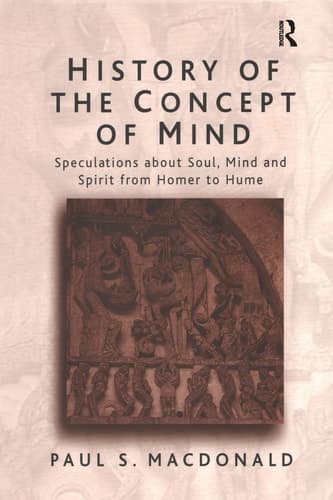
History of the Concept of Mind: Volume 1: Speculations About Soul, Mind and Spirit from Homer to Hume
by Paul S. Macdonald
Ryle wrote this in 1949 as a direct philosophical response to the Cartesian dualism that James grappled with—the mind-body problem that haunts the *Briefer Course*. He's witty, rigorous, and occasionally infuriating in the best way, and he forces you to reconsider what James meant by "consciousness" and "habit" with sharper conceptual tools.
View bookAbout William James
W
William James
1843–1916
Henry James, was an American writer, regarded as one of the key figures of 19th-century literary realism. He was the son of Henry James, Sr., a clergyman, and the brother of philosopher and psychologist William James and diarist Alice James. ([Source][1].) [1]:http://en.wikipedia.org/wiki/Henry_James
View author page