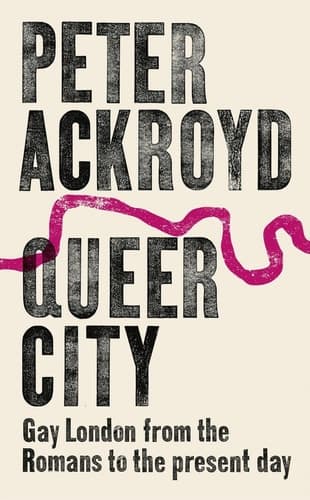
Queer City Gay London from the Romans to the Present Day
Peter AckroydPublished2017
Pages272
Formathardcover
PublisherRandom House UK
Synopsis
Peter Ackroyd is our preeminent chronicler of London. In Queer City, he looks at the metropolis in a whole new way - through the history and experiences of its gay population. In Roman Londinium the penis was worshipped and homosexuality was considered admirable. The city was dotted with lupanaria ('wolf dens' or public pleasure houses), fornices (brothels) and thermiae (hot baths). Then came the Emperor Constantine, with his bishops and clergy, monks and missionaries. His rule was accompanied by the first laws against queer practices. What followed was an endless loop of alternating permissiveness and censure, from the notorious Normans, whose military might depended on masculine loyalty, and the fashionable female transvestism of the 1620s; to the frenzy of executions for sodomy in the early 1800s and the 'gay plague' in the 1980s. Ackroyd takes us right into this hidden city, celebrating its diversity, thrills and energy on the one hand; but reminding us of its very real terrors, dangers and risks on the other. In a city of superlatives, it is perhaps this endless sexual fluidity and resilience that epitomise the real triumph of London.
Recommendations
Generating recommendations…
Our AI is preparing recommendations for Queer City Gay London from the Romans to the Present Day. This usually takes under a minute.
About Peter Ackroyd
P
Peter Ackroyd
Born 1949
Peter Ackroyd is an English biographer, novelist and critic with a particular interest in the history and culture of London. For his novels about English history and culture and his biographies of, among others, William Blake, Charles Dickens, T. S. Eliot and Sir Thomas More, he won the Somerset Maugham Award and two Whitbread Awards. He is noted for the volume of work he has produced, the range of styles therein, his skill at assuming different voices and the depth of his research. He was elected a fellow of the Royal Society of Literature in 1984 and appointed a Commander of the Order of the British Empire in 2003. - Wikipedia
View author page