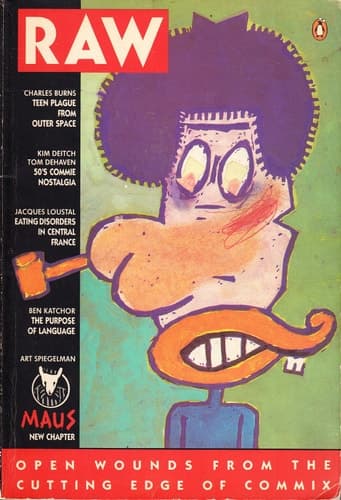
Raw, Volume 2, Number 1 Open Wounds from the Cutting Edge of Commix
Art SpiegelmanPublished1989
Pages201
Formatpaperback
PublisherPenguin Books
Synopsis
Comic strips deal with extraterrestrials, ants, political satire, dreams, time, marriage, school, the future, and the Holocaust
Recommendations
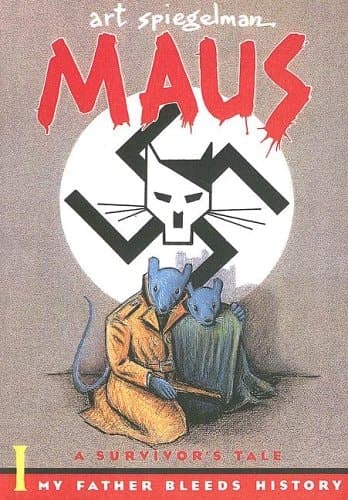
The Complete Maus A Survivor's Tale
by Art Spiegelman
Wait—I know you've likely encountered this, but if you haven't read the complete collected edition, it's essential. Spiegelman's layering of personal narrative with historical trauma, his formal experimentation with panel structure to convey psychological states, and his refusal to sentimentalize the Holocaust while still finding moments of dark humor—these are the techniques that Raw was incubating.
View book
The Arrival
by Bobbi J. G. Weiss
Tan creates a wordless graphic novel about immigration and displacement that operates almost like a fever dream—surreal, unsettling imagery that communicates emotional truth rather than literal fact. Like the extraterrestrial and dream sequences in Raw, he trusts visual language to do what words can't, building meaning through accumulation of strange, precise details rather than exposition.
View book
Quilting and Braiding The Feminist Christologies of Sallie McFague and Elizabeth A. Johnson in Conversation
by Shannon Schrein
This is the curveball—but hear me out. Kimmerer writes essays that feel like the political satire and ecological thinking embedded in Raw's ant sequences, except she's serious about it. She's examining how we structure knowledge and relationship to the world, using personal narrative, scientific observation, and indigenous philosophy in conversation with each other. It's formally inventive nonfiction that asks the same questions about perspective and power that Spiegelman's comics do.
View book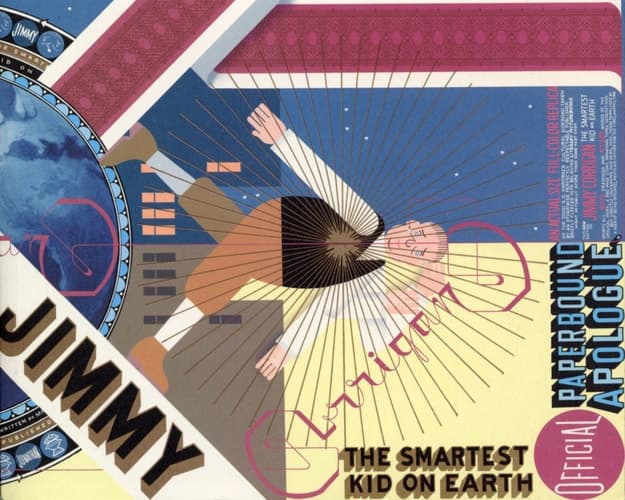
Jimmy Corrigan: The Smartest Kid on Earth
by Chris Ware
Ware inherited the Raw tradition and pushed it further—his comics about loneliness, family dysfunction, and American disappointment use architectural precision in panel layout to mirror emotional fragmentation. Where Spiegelman moves between registers (dream, history, present), Ware collapses time within a single page, using color and geometry to make you *feel* temporal dislocation rather than just understand it intellectually.
View book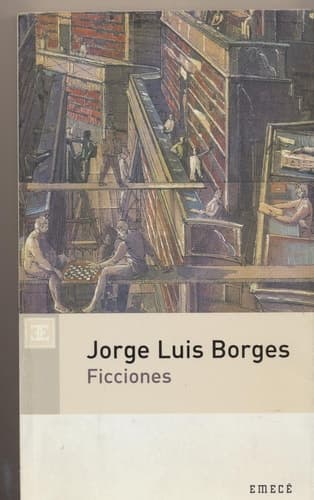
Ficciones
by Jorge Luis Borges
Published in 1944, this collection predates Raw by decades, but it's the literary ancestor of Spiegelman's approach to time and reality. Borges writes stories that are essentially thought experiments about knowledge, infinity, and how we organize meaning—the same intellectual playfulness that animates Raw's political satire and dream sequences. His stories are brief, dense, and they make you reconsider what's possible within a form.
View bookAbout Art Spiegelman
Biography coming soon.
View author page