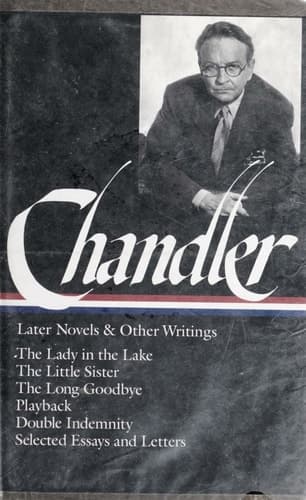
Raymond Chandler: Later Novels and Other Writings: The Lady in the Lake / The Little Sister / The Long Goodbye / Playback /Double Indemnity / Selected Essays and Letters (Library of America)
Raymond ChandlerPublished1995
Pages1088
Formathardcover
PublisherLibrary of America
Synopsis
With humor, along with an unerring sense of dialogue and the telling details of dress and behavior, Raymond Chandler created a distinctive fictional universe out of the dark side of sunlit Los Angeles. In the process, he transformed both crime writing and the American language.
Written during the war, The Lady in the Lake (1943) takes Philip Marlowe out of the seamy L.A. streets to the deceptive tranquility of the surrounding mountains, as the search for a businessman’s missing wife expands into an elegy of loneliness and loss. The darker tone typical of Chandler’s later fiction is evident in The Little Sister (1949), in which an ambitious starlet, a blackmailer, and a seemingly naïve young woman from Manhattan, Kansas, are the key players in a plot that provides fuel for a bitter indictment of Hollywood and Chandler’s most savage portrayal of his adopted city.
The Long Goodbye (1953), his most ambitious and self-revealing novel, uncovers a more anguished resonance in the Marlowe character, in a plot that hinges on the betrayal of friendship and the compromises of middle age. Playback (1958), written originally as a screenplay, is Chandler’s seventh and last novel.
A special feature of this volume is Chandler’s long-unavailable screenplay for the film noir classic, Double Indemnity (1944), adapted from James M. Cain’s novel. Written with director Billy Wilder, it is one of the best screenplays in American cinema, masterful in construction and dialogue. Supplementing the volume, and providing a more personal glimpse of Chandler’s personality, is a selection of letters and essays—including “The Simple Art of Murder,” in which Chandler muses on his pulp roots and on the special qualities of his hero and style.
LIBRARY OF AMERICA is an independent nonprofit cultural organization founded in 1979 to preserve our nation’s literary heritage by publishing, and keeping permanently in print, America’s best and most significant writing. The Library of America series includes more than 300 volumes to date, authoritative editions that average 1,000 pages in length, feature cloth covers, sewn bindings, and ribbon markers, and are printed on premium acid-free paper that will last for centuries.
Recommendations
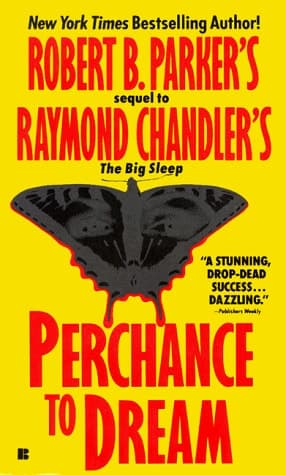
Perchance to Dream Robert B. Parker's Sequel to Raymond Chandler's The Big Sleep
by Robert B. Parker
Wait—I know you just finished Chandler's later work, but if you haven't read his earlier Marlowe novels, *The Big Sleep* is where this whole universe begins. The difference is illuminating: you'll see how Chandler's prose gets sharper and his worldview darker over time, and returning to 1939 Los Angeles with fresh eyes after *The Long Goodbye* creates this poignant sense of watching a character age across decades.
View book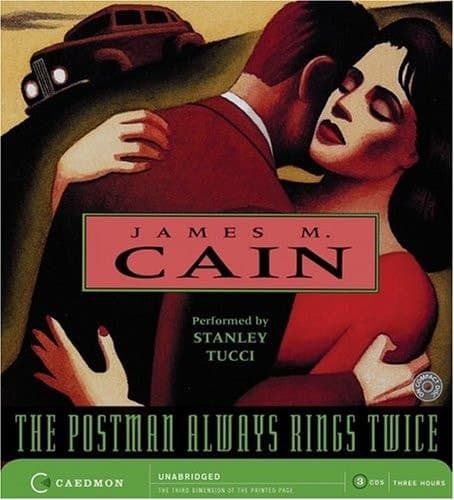
The Postman Always Rings Twice
by James M. Cain
Since you read Chandler's *Double Indemnity* screenplay, you're already familiar with Cain's sensibility—but his own novels hit differently. This one has that same claustrophobic fatalism and doomed passion, but Cain writes with even more brutal economy, stripping away Chandler's lyrical observations to focus on pure appetite and consequence. It's shorter, meaner, and absolutely hypnotic.
View book
The Grifters
by Jim Thompson
Thompson takes the criminal underworld Chandler depicted and pushes it into psychological territory that's almost unbearably tense. Where Chandler's Marlowe maintains a moral center even when compromised, Thompson's characters are entirely self-interested—the dialogue crackles with the same authenticity you loved in Chandler, but it's weaponized, every conversation a con within a con. The family dynamics add a layer of emotional damage Chandler rarely explored.
View book
The Killer Inside Me
by Jim Thompson
Here's the curveball: Oates' psychological crime novel operates in Chandler's Los Angeles landscape but from inside a killer's mind rather than a detective's. It's a study of how charm and surface respectability mask pathology—themes Chandler touched on, but Oates pursues with the intensity of literary fiction rather than genre convention. The prose is beautiful and disturbing in equal measure, and it'll make you reconsider what you thought you knew about noir morality.
View bookAbout Raymond Chandler
R
Raymond Chandler
1888–1959
Biography coming soon.
View author page