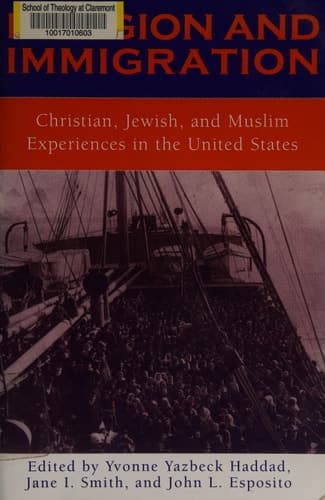
Religion and Immigration Christian, Jewish, and Muslim Experiences in the United States
Yvonne Yazbeck HaddadPublished2003
Pages296
Formatpaperback
PublisherBloomsbury Publishing PLC
Synopsis
Since its inception, the United States has defined itself as a nation of immigrants and a land of religious freedom. But following September 11, 2001 American openness to immigrants and openness to other beliefs have come into question. In a timely manner, Religion and Immigration provides comparative perspectives on Protestants, Catholics, Muslims and Jews entering the American scene. Will Muslims seek and receive inclusion in ways similar to Catholics and Jews generations before? How will new immigrant populations influence and be influenced by current religious communities? How do overlapping identities of home country, language, class, and ethnicity affect immigrants' sense of their religion? How do the faithful retain their values in a new country of individualism and pluralism? How do religious institutions help immigrants with their physical needs as they are entering a new country? The contributors to Religion and Immigration approach these questions from the perspectives of theology, history, sociology, international studies, political science, and religious studies. A concluding chapter provides results from a pioneering study of immigrants and their religious affiliation. Leading scholars Haddad, Smith, and Esposito have created a valuable text for classes in history, religion or the social sciences or for anyone interested in questions of American religion and immigration.
Recommendations
Ordination of Women in the Catholic Church Unmasking a Cuckoo's Egg Tradition
by John Wijngaards
Barger takes Haddad's framework of how immigrant and established religious communities negotiate identity and pushes it inward, examining how Catholic women navigate institutional belonging while maintaining individual conscience. Where Haddad maps the external landscape of religious pluralism, Barger explores the internal tensions within a single tradition—giving you the granular, lived experience that complements the comparative overview you just finished.
View book
Religion and the Rise of Jim Crow in New Orleans
by James B. Bennett
This is the surprise pick, but hear me out: Alexander examines how American institutions have systematized exclusion while maintaining the rhetoric of equality and opportunity—the exact tension Haddad identifies in post-9/11 America's treatment of Muslim immigrants. It's not about religion per se, but it's essential context for understanding how the 'nation of immigrants' narrative masks structural barriers that religious communities must navigate.
View book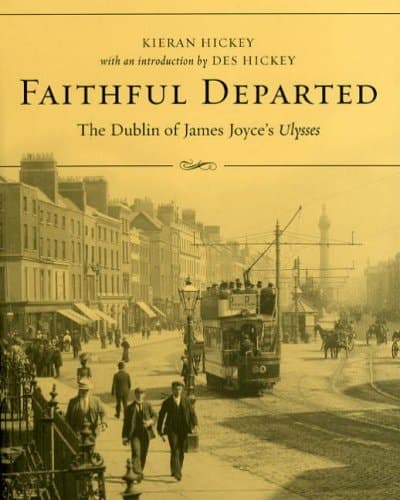
Faithful Departed: The Dublin Of James Joyce's Ulysses
by Kieran Hickey
Lawler provides a historical case study of exactly the kind of religious community transformation Haddad asks about—what happens when an established immigrant church loses its institutional grip? By focusing on one city and one tradition over decades, you'll see the mechanisms of religious change that Haddad's comparative approach necessarily abstracts away.
View book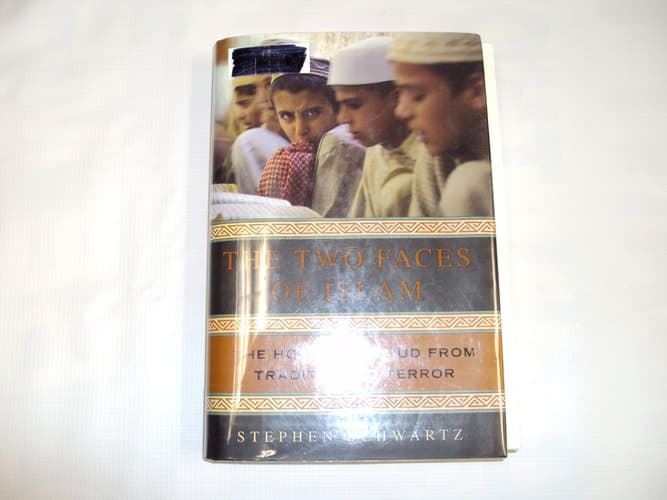
The Two Faces of Islam: The House of Sa'ud from Tradition to Terror
by Stephen Schwartz
Published nearly two decades after Haddad's work, Husain offers a sweeping historical perspective on Islamic civilization that contextualizes the Muslim-American experience within much longer narratives of cultural encounter and adaptation. It's the historical depth that helps explain *why* the questions Haddad raises about Muslim inclusion matter—you'll understand the weight of what's being negotiated.
View book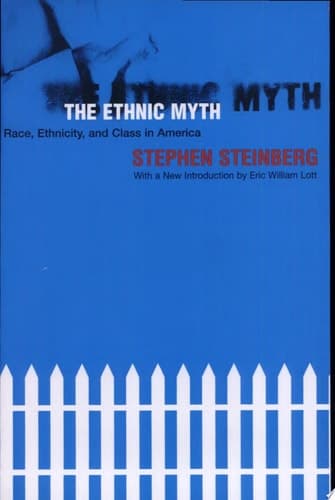
The Ethnic Myth Race, Ethnicity, and Class in America
by Stephen Steinberg
Steinberg directly challenges the immigrant success narrative that Haddad takes as her starting point, arguing that ethnicity and religion are less determining than economic structures. If you found yourself questioning some of Haddad's assumptions about how religious institutions facilitate integration, Steinberg will sharpen that critical lens considerably—he's writing in conversation with exactly this scholarship.
View bookAbout Yvonne Yazbeck Haddad
Y
Yvonne Yazbeck Haddad
Born 1935
Biography coming soon.
View author page