Synopsis
Roderick is combative, often violent, but capable of great affection and generosity. His father had been disinherited and has left Scotland leaving his son penniless. After a brief apprenticeship to a surgeon, the innocent Roderick travels to London where he encounters various rogues.
Recommendations
The Pickwick Papers
by Charles Dickens
Dickens captures that same picaresque energy where a well-meaning protagonist stumbles through a gallery of unforgettable rogues and con artists, but with considerably more warmth and humor than Smollett allows. Where Roderick is sharp-edged and often bitter about his misfortunes, Pickwick finds comedy in chaos—yet both authors use episodic encounters to build a portrait of society from the ground up.
View book
Moll Flanders
by Daniel Defoe
This is the flip side of Roderick's coin—a protagonist equally resourceful and morally flexible, navigating poverty and London's underworld with cunning rather than violence. Defoe's matter-of-fact narration about survival, crime, and reinvention has that same unsentimental edge Smollett brings, but told from someone scrappier and more calculating than Roderick.
View book
The Confidence-Man His Masquerade
by Herman Melville
A century after Smollett, Melville takes the rogue-filled journey concept and makes it genuinely unsettling—a Mississippi riverboat becomes a floating con game where you're never sure who's deceiving whom. It has Roderick's fascination with how people exploit each other, but Melville strips away the adventure-story reassurance and leaves you in genuine moral fog.
View book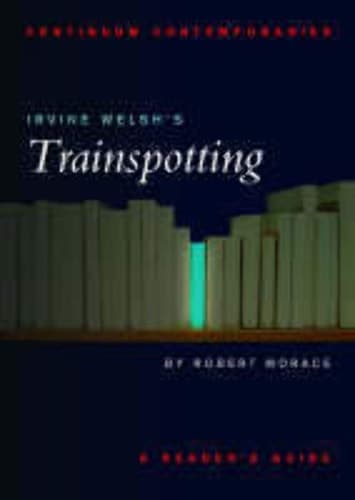
Irvine Welsh's Trainspotting A Reader's Guide
by Robert Morace
Here's your surprise pick: Welsh writes about desperate young men in 1980s Edinburgh with the same unflinching eye Smollett brought to 18th-century London—brutal, darkly funny, and refusing to sentimentalize poverty or addiction. The dialect-heavy prose and rapid-fire character switching echo Smollett's cacophony, but Welsh updates it to a world where the violence is more internal and the rogues are self-destructing.
View book
The Apocalyptic Vision of Mikhail Bulgakov's the Master and Margarita (Studies in Slavic Language & Literature)
by Edward E. Ericson
Bulgakov weaves together a picaresque Moscow where a mysterious stranger encounters con artists, bureaucrats, and the desperate—but adds a supernatural layer that makes the whole thing feel like a fever dream. Like Smollett, he's fascinated by how people deceive and survive, but he uses that framework to ask bigger questions about art, power, and what's real.
View bookAbout Tobias George Smollett
T
Tobias George Smollett
1721–1771
A Scottish physician, poet and author.
View author page