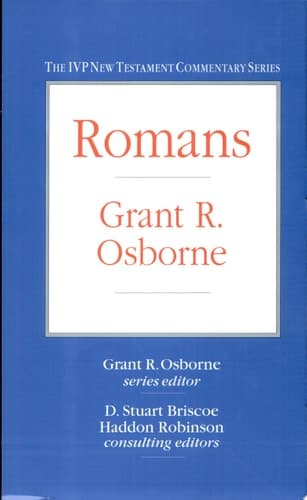
Synopsis
"Few individual books of the Bible have changed the course of church history the way Paul's letter to the Romans has. Whether we think of Augustine's conversion in the fourth century, Luther's recovery of justification by faith in the sixteenth or Barth's challenge to reestablish the primacy of theological exegesis of the Bible in the twentieth, Romans has been the catalyst to personal spiritual renewal and the recapturing of gospel basics." "Paul, in seeking to bring unity and understanding between Jews and Gentiles in Rome, sets forth his most profound explication of the gospel and its meaning for the church. The letter's relevance is as great today as it was in the first century." "In this careful study of Romans, readers will find an introduction that sets the letter in context and surveys its general content, highlighting issues surrounding its authorship, date, occasion and purpose. Passage-by-passage commentary follows that explains what the letter means to us today as well as what it meant for its original hearers." "Students, pastors, Bible teachers and everyone who wants to understand Paul's message for the church will benefit from this excellent resource."--BOOK JACKET.
Recommendations
Cutting Too Close for Comfort: Paul's Letter to the Galatians in Its Anatolian Cultic Context (Journal for the Study of the New Testament Supplement Series #248)
by Susan M. Elliott
Bruce's commentary on Galatians offers the same meticulous passage-by-passage exegesis you appreciated in Osborne, but focuses on Paul's most heated letter—where he's defending justification by faith against fierce opposition. If Romans is Paul's systematic theology, Galatians is Paul in the trenches, and Bruce's careful analysis shows how these letters illuminate each other.
View book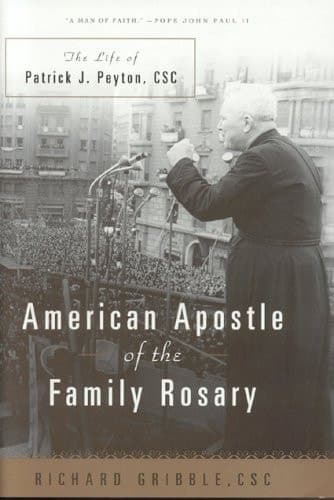
American Apostle of the Family Rosary A Life of Patrick J. Petyon, CSC
by Richard Gribble
Rather than staying within one letter, Pollock reconstructs Paul's entire life and missionary journeys with narrative flair, showing you how Romans fits into the arc of his apostolic work and struggles. It's a different approach than Osborne's verse-by-verse method—more biographical storytelling—but it deepens your understanding of *why* Paul wrote what he did and *to whom*.
View bookChristian Origins and the Question of God: The New Testament and the people of God
Christian Origins and the Question of God: The New Testament and the people of God
by Nicholas Thomas Wright
Wright takes a step back from Romans itself to examine the entire theological landscape Paul inhabited—Jewish apocalypticism, Greco-Roman politics, early Christian identity. It's denser and more theoretical than Osborne, but if you found yourself curious about the "occasion and purpose" sections of the commentary, Wright's framework will reshape how you read Paul's arguments about Jews, Gentiles, and God's plan.
View book
God and Other Minds A Study of the Rational Justification of Belief in God
by Alvin Plantinga
Here's your "surprise" pick: Piper takes just three chapters of Romans—the section many readers find most perplexing—and builds an entire theological treatise around them. It's part commentary, part philosophy, part spiritual wrestling match. If Osborne gave you the landscape, Piper zooms into one difficult valley with obsessive care, showing how exegesis can become something closer to theological philosophy.
View book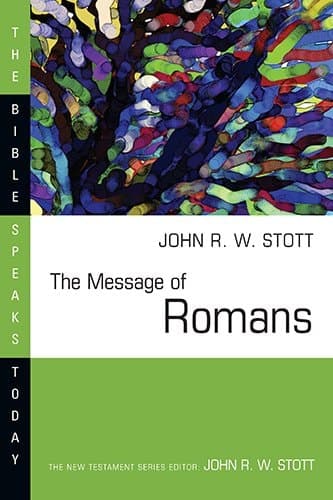
The Message of Romans God's Good News for the World
by John Stott
Stott writes for a slightly different audience than Osborne—less technical, more pastoral—but his gift is making Paul's logic luminous without oversimplifying it. Published in 1994, it represents an earlier generation of evangelical commentary, so you'll see how scholars' understanding of Romans has evolved, and Stott's emphasis on the letter's *relevance* (rather than just its meaning) gives you tools for applying what you've learned.
View bookAbout Grant R. Osborne
Biography coming soon.
View author page