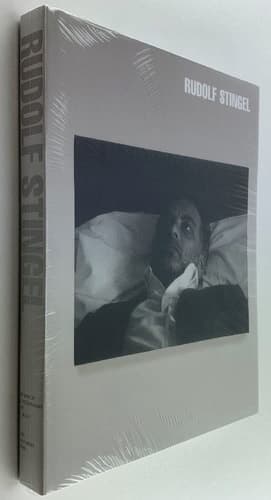
Rudolf Stingel
Francesco BonamiPublished2007
Pages246
Formathardcover
PublisherMuseum of Contemporary Art
Synopsis
Celebrated for his explorations of the process of painting and the “idea” of painting, Rudolf Stingel (b. 1957) combines minimalist, conceptual, and performative practices to create unexpected spaces. This highly anticipated book, the premier critical survey of Stingel’s career to date, accompanies the Italian-born artist’s first solo museum exhibition in the United States.
Employing a palette of a wide range of materials, Stingel reflects upon fundamental questions facing painting today: authenticity, meaning, hierarchy, and context. By transforming the materiality, process, and perception of paintings, Stingel’s work alters the viewer’s perception of and physical encounter with the artwork and invites the viewer to participate in or collaborate in a new and deeper understanding and appreciation of art. For example, by carpeting Grand Central Station (Plan B, 2004), he transformed the station hall itself into a work of art that viewers had to occupy to experience and that fashioned its own audience from travelers forced to traverse it.
His full range of work, including his recent portraits and self-portraits, is represented in this handsome volume. With important contributions by Whitney curator Chrissie Iles and Reiner Zettl, Rudolf Stingel: Painting 1987–2007 is the first book to examine the broader implications of the artist’s creative practice in contemporary society.
Recommendations
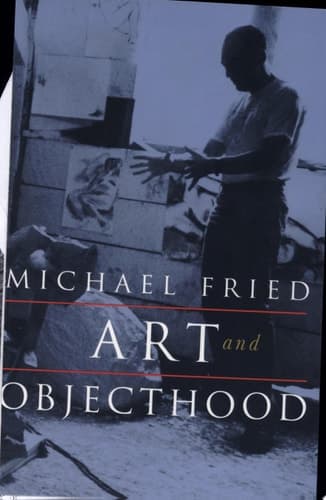
Art and Objecthood Essays and Reviews
by Michael Fried
Fried's essays are the theoretical backbone for understanding exactly what Stingel is doing—interrogating the relationship between viewer, object, and space. Where Bonami's book shows you Stingel's practice, Fried gives you the philosophical language to articulate why that practice matters, especially his argument about how art demands our presence and attention in ways that go beyond passive looking.
View book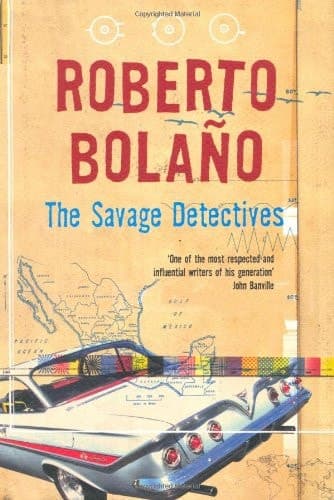
The Savage Detectives A Novel
by Roberto Bolaño
This is your surprise pick—a sprawling novel that operates like Stingel's installations do: it forces you to actively participate in meaning-making rather than passively consume it. Bolaño's fragmented structure, his obsession with process over product, and his way of making readers collaborate in assembling narrative meaning echo Stingel's invitation for viewers to co-create understanding. It's a book that transforms the act of reading itself.
View book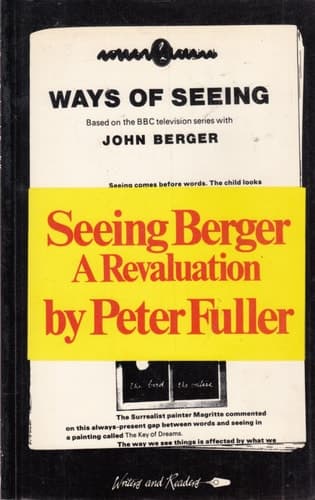
Seeing Berger: A Reevaluation of Ways of Seeing
by Peter Fuller (John Berger)
Published in 1972, this book predates your Stingel volume by decades but feels essential—Berger fundamentally rewired how we think about visual perception and the constructed nature of what we see. Since Stingel's entire practice hinges on altering perception and context, Berger's essays on reproduction, perspective, and the male gaze provide crucial historical grounding for understanding how contemporary artists like Stingel inherited and transformed these questions.
View book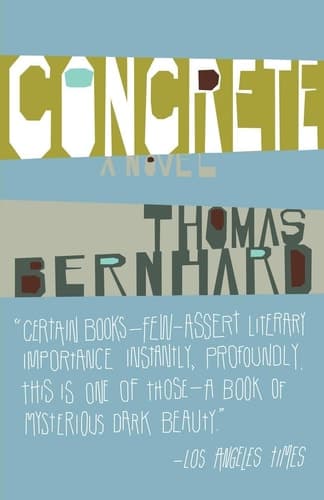
Concrete
by Thomas Bernhard
Heatherwick's monograph documents an architect-designer who, like Stingel, is obsessed with how materials behave and how physical spaces transform human experience. His projects—from bridge designs to public installations—share Stingel's conviction that you can't separate the artwork from the viewer's bodily encounter with it, and that materials themselves have agency and meaning.
View book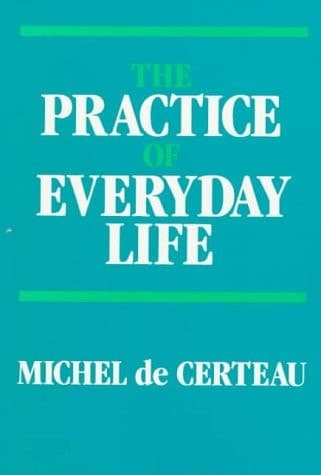
The Practice of Everyday Life
by Michel de Certeau
De Certeau's framework for understanding how ordinary people navigate and reinterpret spaces directly illuminates what Stingel does when he carpets Grand Central—he's creating a situation where the everyday becomes strange and viewers become conscious of their own participation. This book teaches you to see how Stingel's practice is fundamentally about democratizing the act of art-making and meaning-making.
View bookAbout Francesco Bonami
Biography coming soon.
View author page