Synopsis
From the Pulitzer Prize-winning author of The Looming Tower comes a fascinating book about religion in America, about the passions, triumphs, and failures of the life of faith, revealing stories of grace and despair, sexual scandal and attempted murder. • "Insightful...vivid...beautifully rendered stories." —Chicago Tribune
Lawrence Wright's Saints and Sinners are Jimmy Swaggart, who preached a hellfire gospel with rock 'n' roll abandon before he was caught with a, prostitute in a seedy motel; Anton LaVey, the kitsch-loving, gleefully fraudulent founder of the First Church of Satan; Madalyn Murray O'Hair, whose litigious atheism sometimes resembled a brand of faith; Matthew Fox, the Dominican priest who has aroused the fury of the Vatican for dismissing the doctrine of original sin and denouncing the church as a dysfunctional family; Walker Railey, the rising star of Dallas's Methodist church, who, at the pinnacle of his success, was suspected of attempting to murder his wife; and Will Campbell, the eccentric liberal Southern Baptist preacher whose challenges to established ways of thinking have made him a legend in his own time.
Recommendations

The Year of Magical Thinking A Play by Joan Didion Based on Her Memoir
by Joan Didion
Like Wright's portraits of faith and failure, Didion dissects a deeply personal crisis with the precision of a journalist, examining how belief systems—in her case, the rituals of marriage and family—collapse under scrutiny. Both writers refuse sentimentality while exploring how people construct meaning in the face of chaos, though Didion's lens is intimate memoir rather than biographical panorama.
View book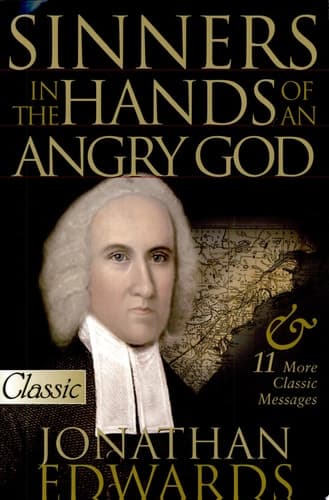
Sinners in the Hands of an Angry God
by Jonathan Edwards
This collection takes you to the theological roots that shaped all the characters Wright examines—the fire-and-brimstone rhetoric that Swaggart inherited, the very doctrine Fox rejected. Reading Edwards directly gives you the original language and fervor that echoes through every profile in Saints and Sinners, making Wright's modern figures feel like variations on centuries-old American obsessions.
View book
The Apocalyptic Vision of Mikhail Bulgakov's the Master and Margarita (Studies in Slavic Language & Literature)
by Edward E. Ericson
This is the curveball recommendation: a 1960s Soviet novel that's actually a brilliant companion to Wright's work because it's also about competing visions of truth, authority, and faith—but filtered through satire and magical realism rather than journalism. The Devil himself appears as a character here, making LaVey's theatrical Satanism feel quaint by comparison, and the novel's exploration of how institutions corrupt idealism mirrors Wright's themes without a single biographical detail.
View book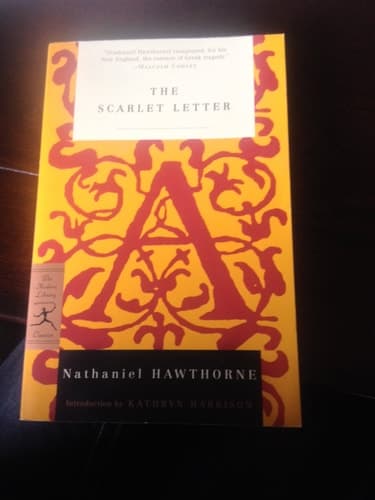
Nathaniel Hawthorne, The Scarlet Letter
by Elmer Kennedy-Andrews
Published in 1850, this novel examines the same American obsession with public sin and private redemption that Wright documents in his modern subjects. Hawthorne's Puritan Boston and Wright's late-20th-century megachurches are separated by 150 years, but both explore how communities weaponize shame and how individuals navigate the gap between their inner lives and their public personas—especially around sexuality and hypocrisy.
View book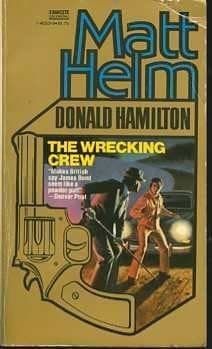
The Wrecking Crew
by Donald Hamilton
Frank dissects American institutions and ideologies with the same narrative flair Wright brings to biography, examining how movements (religious, political, economic) become corrupted from within. Where Wright gives you intimate portraits of individual believers, Frank zooms out to show the systems they're operating in—a natural next step for understanding the broader context of the religious figures Wright profiles.
View bookAbout Lawrence Wright
L
Lawrence Wright
Born 1947
Biography coming soon.
View author page