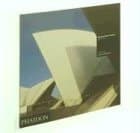
Schnabel House: Frank Gehry (Architecture in Detail)
James SteelePublished1992
Pages60
Formatpaperback
PublisherPhaidon Press
Synopsis
Gehry is widely acknowledged as the father of the 'Los Angeles School'. His work, characterized by its collage-like complexity, has been described as 'habitable sculpture'. This is one of Gehry's most accomplished single family houses.
Recommendations
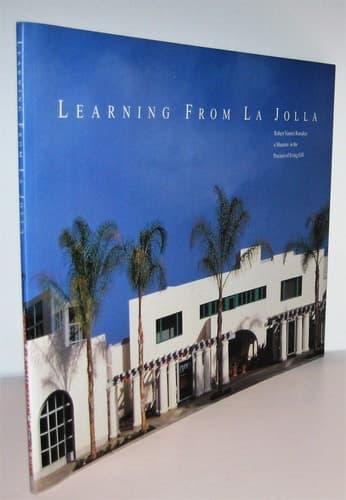
Learning From La Jolla: Robert Venturi Remakes a Museum in the Precinct of Irving Gill
by Hugh Davies
Where Steele's book celebrates Gehry's sculptural approach to residential space, Venturi et al. argue for embracing complexity and contradiction in architecture itself—they'd probably see the Schnabel House's collage-like quality as exactly the kind of 'messy vitality' they champion. This is essential reading for understanding the theoretical underpinnings of the Los Angeles School that Gehry helped define.
View book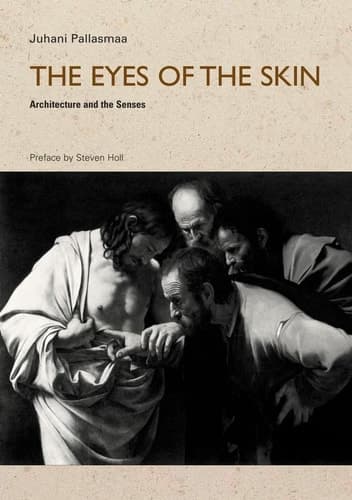
The Eyes of the Skin Architecture and the Senses
by Juhani Pallasmaa
Pallasmaa writes about how buildings are experienced through all five senses, not just visually—and the Schnabel House, with its dramatic material contrasts and spatial surprises, is exactly the kind of structure that demands this kind of phenomenological reading. His prose is poetic without being vague, grounded in the actual experience of moving through space.
View book
Cultural Complexity in Organizations Inherent Contrasts and Contradictions
by Sonja Sackmann
Published in 1966, this earlier work directly prefigures the aesthetic values Gehry would later embody—Venturi's argument for 'both/and' rather than 'either/or' design is the philosophical DNA of the Schnabel House's unapologetic formal complexity. It's a shorter, more polemical read than Learning from Las Vegas, and it'll make you see Gehry's work through a clearer historical lens.
View book
The Savage Detectives A Novel
by Roberto Bolaño
This might seem like a left turn, but hear me out: Bolaño's novel is structured like a collage of fragments, conversations, and competing narratives that somehow cohere into something larger and stranger than any single perspective could capture—it's the literary equivalent of what Gehry does spatially in the Schnabel House. Both works reward close attention to how their parts relate to the whole.
View book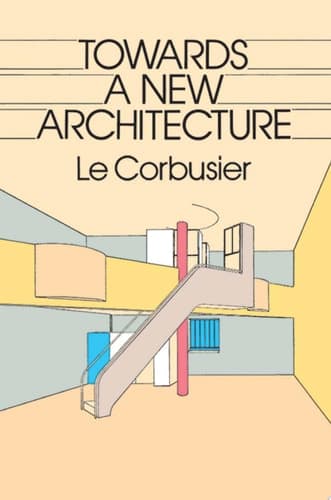
Towards a New Architecture
by Le Corbusier
Le Corbusier's 1923 manifesto is the modernist foundation that Gehry's work simultaneously honors and rebels against—reading this polemic about 'machines for living' will make you appreciate exactly how radically the Schnabel House departs from that vision while still engaging with its core questions about what a house should be. It's the necessary counterpoint to understanding Gehry's achievement.
View bookAbout James Steele
J
James Steele
Born 1943
Biography coming soon.
View author page