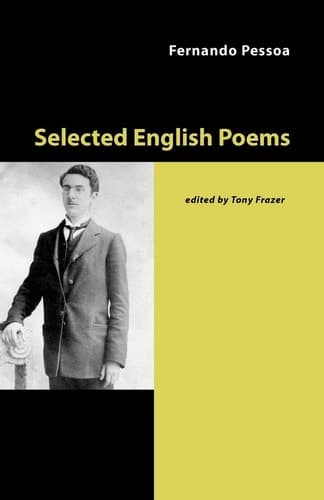
Synopsis
Pessoa wrote a large number of poems in English, some of them in the guise of early heteronyms (such as Alexander Search and Charles Robert Anon) which prove to be fascinating precursors of the later, modernist work in Portuguese. While not the equal of the masterly Caeiro, Campos, Reis or Pessoa-himself, these poems deserve to be better known and at least available in the English-speaking world.Pessoa was educated in English in Durban, as the stepson of a Portuguese diplomat, and was completely bilingual. He translated several books from English for Portuguese publishing houses. The sometimes startlingly frank content of the earlier English poems (published privately in Lisbon) may well have prevented their wider dissemination in more prudish British circles. What is not so well-known is that Pessoa continued to write poetry in a bookish form of English throughout his life and this volume is an attempt to show the nature of that work to its originally intended audience: an anglophone readership.
Recommendations
The Book of Disquiet
by Fernando Pessoa
I know—same author, but hear me out. You've just encountered Pessoa's English heteronyms as literary masks; this prose work is where he truly perfected that technique, creating an entire fragmented autobiography through the eyes of Bernardo Soares. It's the natural next step to understand how Pessoa weaponized multiplicity across both languages and forms.
View book
Gwendolyn Brooks' Maud Martha: A Critical Collection
by Jaqueline Bryant
Brooks wrote this novel in verse—or rather, in prose-poetry that refuses to choose between the two—and like Pessoa's English poems, it's a work that's been somewhat overshadowed by the author's more celebrated work while deserving far greater recognition. The intimate, unflinching voice and the way Brooks captures consciousness in fragmented moments will feel familiar to you after Pessoa's compressed intensity.
View book
The Savage Detectives A Novel
by Roberto Bolaño
This is a departure in scope—it's sprawling where Pessoa is concentrated—but Bolaño shares Pessoa's obsession with literary personas, hidden manuscripts, and the gap between what poets claim to be doing and what they're actually doing. The novel's structure mirrors Pessoa's heteronymic method: multiple voices, unreliable narrators, and the sense that you're reading fragments of a larger, perhaps unknowable whole.
View book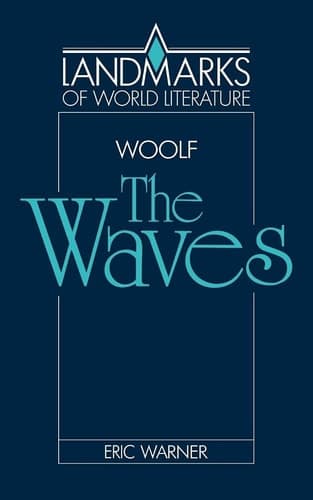
Virginia Woolf: The Waves
by Eric Warner
Here's your surprise recommendation: Woolf's most experimental novel is structured around six interlocking voices that blur into and out of each other, much like Pessoa's heteronyms, but she's doing it through stream-of-consciousness rather than distinct personas. The book reads like poetry even when it's technically prose, and Woolf's interest in how identity fragments and reforms will resonate deeply with what you've just experienced in Pessoa's English work.
View book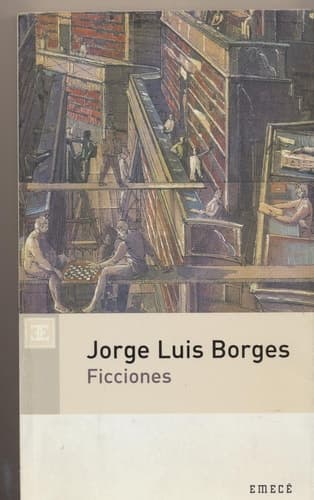
Ficciones
by Jorge Luis Borges
Borges was Pessoa's contemporary and shared his fascination with literary invention, false attributions, and the idea that a poem or story might be more 'real' than the person who wrote it. These short stories read like philosophical poems disguised as library catalogs and scholarly footnotes—they have that same bilingual, erudite quality you found in Pessoa's English poems, where learning and imagination become indistinguishable.
View bookAbout Fernando Pessoa
F
Fernando Pessoa
1888–1935
Fernando António Nogueira Pessoa (Lisboa, 13 de junho de 1888 – Lisboa, 30 de novembro de 1935) foi um poeta português identificado com o modernismo, amplamente reconhecido como um dos principais expoentes da língua portuguesa e o maior poeta lusófono do século XX. Atuou também como dramaturgo, ensaísta, tradutor, publicitário, astrólogo, inventor, empresário, correspondente comercial, crítico literário e comentador político. ---------- Fernando Pessoa was a Portuguese poet, writer, literary critic, translator, publisher, and philosopher, described as one of the most significant literary figures of the 20th century and one of the greatest poets in the Portuguese language.
View author page