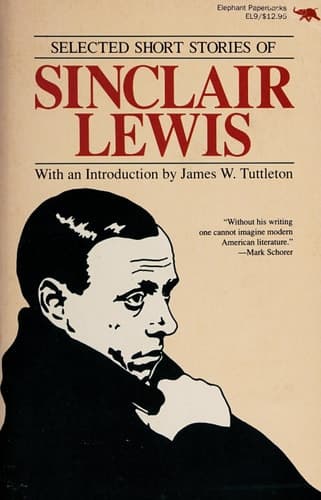
Selected Short Stories of Sinclair Lewis
Sinclair LewisPublished1990
Pages426
Formatpaperback
PublisherElephant Paperbacks
Synopsis
Thirteen stories selected by Lewis himself which illustrate the wide range of his art and interests. Without his writing one cannot imagine modern American literature. Mark Schorer.
Recommendations
Sherwood Anderson's Winesburg, Ohio
by James R. Lindroth
Anderson's interconnected stories about small-town life share Lewis's gift for capturing the quiet desperation beneath ordinary American surfaces, but Anderson leans into psychological depth where Lewis often favors satirical edge. Both writers understand that small towns aren't quaint—they're pressure cookers—but Anderson lets his characters' inner lives breathe in ways that complement Lewis's sharper social critique.
View book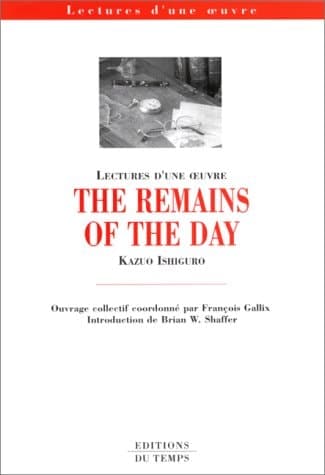
The remains of the day de Kazuo Ishiguro
by Gallix/François
Here's where I'm asking you to trust me a little: Ishiguro's butler narrator has the same unreliable self-awareness that Lewis captures in his most satirical characters, but Ishiguro makes you *feel* the tragedy of self-deception rather than laugh at it. The way Stevens gradually reveals what he's been avoiding mirrors how Lewis's protagonists often can't see their own complicity in their failures—except Ishiguro makes it heartbreaking instead of comic.
View book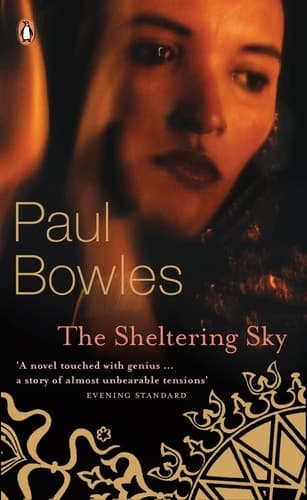
Paul Bowles: The Sheltering Sky, Let It Come Down, The Spider's House (LOA #134) (Library of America Paul Bowles Edition)
by Paul Bowles
Bowles writes Americans abroad the way Lewis writes Americans at home—as people whose cultural assumptions become their undoing. But where Lewis's satire is often affectionate, Bowles is merciless and existential; his desert becomes a character that strips away pretense more thoroughly than any small town ever could. If you want to see what happens when Lewis's critique of American self-delusion meets genuine philosophical dread, this is it.
View book
The Apocalyptic Vision of Mikhail Bulgakov's the Master and Margarita (Studies in Slavic Language & Literature)
by Edward E. Ericson
This might seem like a left turn, but Bulgakov's satirical attack on Soviet bureaucracy and conformity operates on the same frequency as Lewis's critique of American business culture and small-town hypocrisy—just with demons and magic realism thrown in. The novel's multiple storylines and tonal shifts (from biting social comedy to philosophical meditation) give you that same sense of Lewis's range, but filtered through a completely different cultural moment and sensibility.
View book
Reading Marilynne Robinson's Housekeeping (Boise State University Western Writers Series)
by James H. Maguire
Robinson writes about small-town America with the same observational precision as Lewis, but she's interested in what Lewis often leaves alone: the interior lives of women, and the strange grace that can exist alongside social marginalization. Her prose is lyrical where Lewis is brisk, but both writers understand that American towns contain multitudes of quiet rebellion and unspoken longing beneath their respectable surfaces.
View bookAbout Sinclair Lewis
S
Sinclair Lewis
1885–1951
American novelist, short-story writer, and playwright
View author page