
Seltsame Fall des Dr. Jekyll und Mr. Hyde
Robert Louis StevensonPublished1983
Pages167
Formatpaperback
PublisherDt. Taschenbuch-Verlag
Synopsis
»Der seltsame Fall von Dr. Jekyll und Mr. Hyde« - dieser etwas behäbig klingende Titel läßt kaum vermuten, daß sich dahinter eine der aufregendsten Erzählungen der Weltliteratur verbirgt. Auch der Ruhm des Autors Robert Louis Stevenson (1850-1894), dessen Schatzinsel zu den berühmtesten Abenteuerromanen der Weltliteratur gehört, steht dieser Erwartung eher im Wege. Aber wirklich: Der seltsame Fall gehört zu den Schlüsseltexten unseres Zeitalters. Die Erzählung ist spannend wie ein Kriminalroman - und sie ist in gewisser Weise einer! Darum darf hier über ihren Inhalt auch nichts mitgeteilt werden. Wesentlich zu erwähnen bleibt die Neuübersetzung, die sich ganz besonders dicht in Wortlaut und Atmosphäre am Original orientiert. Das Original ist im Paralleldruck ebenfalls parat!Texte für Könner
Recommendations
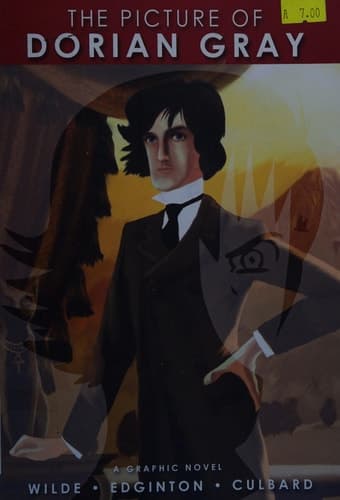
Oscar Wilde's The Picture of Dorian Gray A Graphic Novel
by Oscar Wilde
Like Jekyll and Hyde, Wilde constructs a narrative around a protagonist's hidden corruption—but where Stevenson uses science as the mechanism, Wilde uses aestheticism and moral decay as a slow-motion mirror. Both explore the Victorian anxiety about what lurks beneath a respectable exterior, though Wilde's prose is deliberately ornate where Stevenson's is taut and urgent.
View book
The Strange Case of Dr. Kappler The Doctor Who Became a Killer
by Keith Russell Ablow, MD
This is the surprise pick: it's a contemporary fantasy that borrows Stevenson's exact narrative DNA—a secret scientific experiment gone wrong, a protagonist hiding a dangerous transformation, and that same claustrophobic sense of being trapped by one's own nature. But Suri sets it in Mughal-inspired fantasy worldbuilding, giving you that delicious disorientation of familiar psychological horror in an unfamiliar setting.
View book
The Moonstone, by Wilkie Collins
by Jean-Pierre Naugrette
Collins pioneered the detective novel around the same era Stevenson was writing, and The Moonstone shares that same propulsive mystery-box structure where you're constantly revising your understanding of what's really happening. Where Jekyll and Hyde conceals its revelation in plain sight through narrative misdirection, Collins layers multiple perspectives to keep you perpetually off-balance about who the villain actually is.
View book
The Annotated H.G. Wells, 3 The Invisible Man: A Grotesque Romance: A Critical Text of the 1897 New York First Edition, with an Introduction and Appendices
by H. G. Wells
Wells takes Stevenson's premise of a scientific experiment that unleashes something uncontrollable and pushes it outward—instead of internal duality, the invisibility becomes a weapon that isolates and corrupts. Both novels use their central conceit as a metaphor for power without accountability, but Wells's protagonist is far more actively destructive, making this feel like a darker answer to Jekyll's tragedy.
View book
Anne Brontë, The Tenant of Wildfell Hall Notes
by Hana Sambrook
This 1848 novel predates Jekyll and Hyde by decades, but it's criminally overlooked—it explores the same territory of hidden identity and moral judgment, except Brontë's protagonist is hiding from society's cruelty rather than from her own nature. The narrative structure mirrors Stevenson's use of documents and testimony to slowly reveal what's really happening, but with a protagonist whose "monstrousness" is entirely in the eye of a judgmental Victorian beholder.
View bookAbout Robert Louis Stevenson
Biography coming soon.
View author page