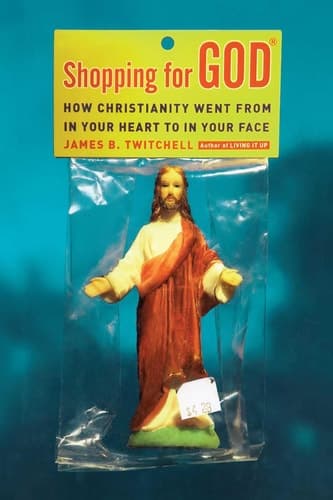
Shopping for God: How Christianity Went from in Your Heart to in Your Face
James B. TwitchellPublished2014
Pages336
Formatpaperback
PublisherSimon & Schuster
Synopsis
Not so long ago religion was a personal matter that was seldom discussed in public. No longer. Today religion is everywhere, from books to movies to television to the internet-to say nothing about politics. Now religion is marketed and advertised like any other product or service. How did this happen? And what does it mean for religion and for our culture?
Just as we shop for goods and services, we shop for church. A couple of generations ago Americans remained in the faith they were born into. Today, many Americans change their denomination or religion, sometimes several times. Churches that know how to appeal to those shopping for God are thriving. Think megachurches. Churches that don't know how to do this or don't bother are fading away. Think mainline Protestant churches.
Religion is now celebrated and shown off like a fashion accessory. We can wear our religious affiliation like a designer logo. But, says James Twitchell, this isn't because Americans are undergoing another Great Awakening; rather, it's a sign that religion providers-that is, churches-have learned how to market themselves. There is more competition among churches than ever in our history. Filling the pew is an exercise in salesmanship, and as with any marketing campaign, it requires establishing a brand identity. Successful pastors ("pastorpreneurs," Twitchell calls them) know how to speak the language of Madison Avenue as well as the language of the Bible.
In this witty, engaging book, Twitchell describes his own experiences trying out different churches to discover who knows how to "do church" well. He takes readers into the land of karaoke Christianity, where old-style contemplative sedate religion has been transformed into a public, interactive event with giant-screen televisions, generic iconography (when there is any at all), and ample parking.
Rarely has America's religious culture been examined so perceptively and so entertainingly. Shopping for God does for religion what Fast Food Nation has done for food.
Recommendations
Amusing Ourselves to Death Public Discourse in the Age of Show Business
by Neil Postman
Postman examines how television has fundamentally altered American discourse and culture in ways we barely notice—much like Twitchell shows how consumer capitalism has reshaped religion. Both authors are cultural critics who use sharp wit and specific examples to reveal the invisible machinery that's changed how we think, believe, and present ourselves to others.
View book
The Righteous Mind Why Good People Are Divided by Politics and Religion
by Jonathan Haidt
Rather than critiquing religion from the outside, Haidt explores *why* people are drawn to moral and spiritual communities in the first place—the psychological architecture beneath the shopping behavior Twitchell describes. He takes seriously what believers actually experience while still maintaining analytical distance, which gives you the other side of the conversation.
View book
The Conquest of New Spain
by Bernal Diaz Del Castillo
This 16th-century account of the Spanish conquest includes fascinating passages on how Christian missionaries deliberately adapted their message to indigenous audiences—essentially the first documented case of religious marketing and cultural repackaging. It's a historical surprise that shows Twitchell's phenomenon isn't new, just turbocharged by modern media.
View book
Bowling Alone The Collapse and Revival of American Community
by Robert D. Putnam
Putnam documents the decline of civic institutions and community organizations in America—the exact institutional landscape where mainline churches are fading, as Twitchell notes. He provides the sociological data and long-view context for understanding why churches must now compete for attention in a fragmented culture that's lost its traditional gathering places.
View book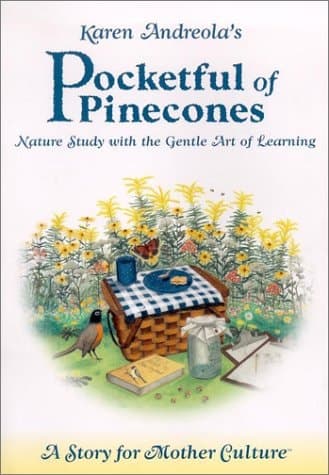
Karen Andreola's Pocketful of Pinecones Nature Study with the Gentle Art of Learning : a Story for Mother Culture
by Karen Andreola
Here's the wildcard: a book about con artists, persuasion techniques, and how people are manipulated into believing false narratives. It's not about religion at all, but the mechanics of how a charismatic person builds trust, establishes authority, and gets people to buy into something intangible maps directly onto Twitchell's 'pastorpreneurs' and the salesmanship of modern megachurches—just stripped of the spiritual context.
View bookAbout James B. Twitchell
J
James B. Twitchell
Born 1943
Biography coming soon.
View author page