Synopsis
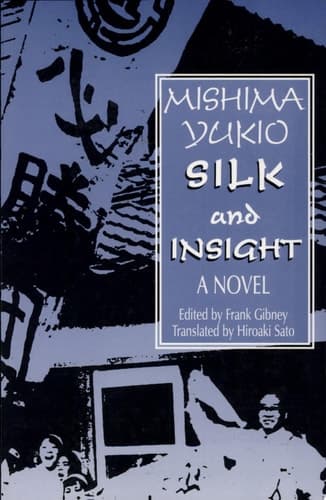
Published in 1964, Silk and Insight (Kinu to Meisatsu), is one of the last works of Yukio Mishima to be translated into English. Besides being a good novel, as one would expect from Mishima, it stands as an excellent piece of social commentary on the transformation of Japanese business from the old paternalism to a new world where labor unions were as active as any other institution in changing their image.One of Mishima's early novels and highly significant as a contribution to Japan's postwar literature and politics, Silk and Insight is based on the strike -- often described as the most significant in the history of Japan's postwar labor movement -- which took place at Omi Kenshi, a silk thread and fabric manufacturer not far from Kyoto. While Mishima has populated the book with interesting and thoroughly believable fictional characters, the events he narrates faithfully reflect the tensions of that period and give a unique picture of the strife upon which Japan's later successful management/labor relations were built.
Recommendations
Generating recommendations…
Our AI is preparing recommendations for Silk and Insight A Novel. This usually takes under a minute.
About Yukio Mishima
Y
Yukio Mishima
1925–1970
Yukio Mishima (三島 由紀夫) was the pen name of Kimitake Hiraoka (平岡 公威), a Japanese author, poet and playwright, also remembered for his ritual suicide by seppuku. At age six, Mishima enrolled in elite Peers School (Gakushuin 学習院). At 12, Mishima began to write his first stories. He read voraciously the works of Oscar Wilde, Rainer Maria Rilke and numerous classic Japanese authors. After six years at school, he became the youngest member of the editorial board in its literary society. Mishima was attracted to the works of Tachihara Michizō, which in turn created an appreciation for the classical form of the waka. Mishima's first published works included waka poetry, before he turned his attention to prose. ([Source][1]) [1]: http://en.wikipedia.org/wiki/Yukio_Mishima
View author page