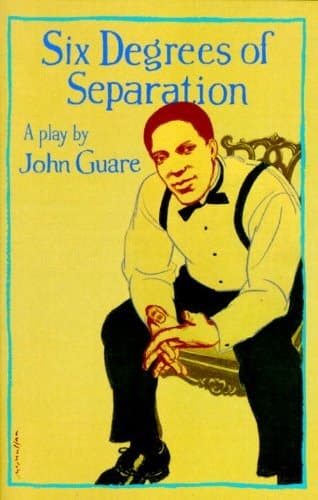
Synopsis
The extraordinary tragicomedy of race, class and manners.
Recommendations
Getting Mother's Body A Novel
by Suzan-Lori Parks
Parks shares Guare's gift for mining comedy from the collision of race, class, and performance—except here, two brothers literally play con games with identity itself. Like Six Degrees, this play uses sharp dialogue and structural cleverness to ask uncomfortable questions about who gets to define whom, but Parks pushes the theatrical artifice even further, making the audience complicit in the game.
View book
Sellout The Inside Story of President Clinton's Impeachment
by David P. Schippers
Beatty's satirical novel does for contemporary Los Angeles what Guare did for 1980s Manhattan—it uses absurdist humor and a narrator who's simultaneously insider and outsider to expose how race and class actually function in America. The tone is caustic where Six Degrees is urbane, but both works refuse easy answers and make you laugh at things that shouldn't be funny.
View book
Guess Who's Coming to Dinner Entertaining at the Georgia Governor's Mansion : Menus, Recipes & Anecdotes
by Mary Beth Busbee
Here's your surprise pick: a psychological thriller that operates on the same principle as Six Degrees—a stranger arrives and upends everything we thought we knew about the people in the room. But where Guare uses the con as a lens for examining privilege, Walter uses it to explore how easily we're all performing versions of ourselves at the dinner table. It's got that same claustrophobic intensity of social interaction as a minefield.
View book
Ralph Ellison - Invisible Man
by Anke Balduf
Published in 1952, this is your cross-decade recommendation, and it's essential: Ellison explores the same territory of identity, race, and social invisibility that Guare returns to, but through a protagonist who's literally unseen by society. The novel's structure—moving through different worlds and performances—parallels how Guare's con man navigates social strata, but Ellison's scope is more philosophical and his prose is hypnotic rather than snappy.
View book
A Gentleman in Moscow A Novel
by Amor Towles
Towles captures that same pleasure in watching someone navigate a closed social world through charm, wit, and careful performance—except his protagonist is literally trapped in a hotel during the Russian Revolution. Like Guare, Towles writes dialogue that crackles with intelligence and uses confined spaces to examine class, manners, and what it means to belong. It's more romantic than Six Degrees, but equally clever about human connection.
View bookAbout John Guare
Biography coming soon.
View author page