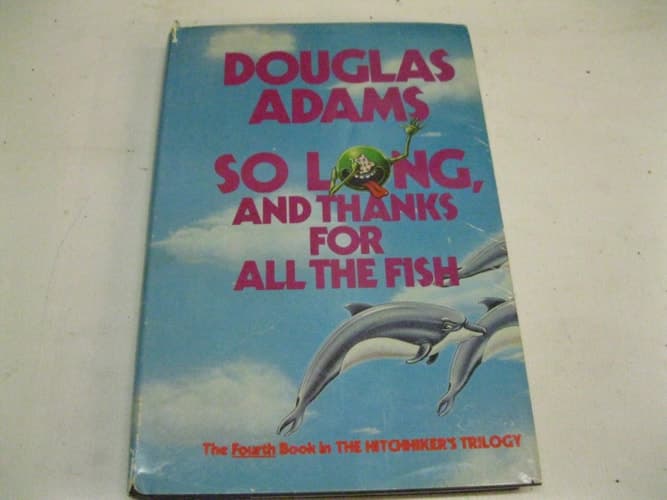
So Long, and Thanks for All the Fish
douglas adamsPublished1984
Pages152
Formathardcover
PublisherHARMONY BOOKS
Synopsis
Back on Earth with nothing more to show for his long, strange trip through time and space than a ratty towel and a plastic shopping bag, Arthur Dent is ready to believe that the past eight years were all just a figment of his stressed-out imagination. But a gift-wrapped fishbowl with a cryptic inscription, the mysterious disappearance of Earth's dolphins, and the discovery of his battered copy of The Hitchhiker's Guide to the Galaxy all conspire to give Arthur the sneaking suspicion that something otherworldly is indeed going on. . . . God only knows what it all means. And fortunately, He left behind a Final Message of explanation. But since it's light-years away from Earth, on a star surrounded by souvenir booths, finding out what it is will mean hitching a ride to the far reaches of space aboard a UFO with a giant robot. But what else is new? Thirty years of celebrating the comic genius of Douglas Adams… There is a knack to flying. The knack lies in learning how to throw yourself at the ground and miss. It’s not an easy thing to do and Arthur Dent thinks he’s the only human who’s been able to master this nifty little trick – until he meets Fenchurch, the girl of his dreams. Fenchurch knows how the world could be made a good and happy place. Unfortunately she’s forgotten. Convinced that the secret lies within God’s Final Message to His Creation they go in search of it. And in a dramatic break with tradition – actually find it… Volume Four in the Trilogy of Five.
Recommendations

The Long Way to a New Land
by Joan Sandin
Chambers captures that same blend of cosmic absurdity and genuine warmth that makes Adams' work so memorable—a ragtag crew on a spaceship where the real story isn't the plot but the relationships and conversations between wildly different species. Like Arthur, her characters are fundamentally decent people navigating an indifferent universe, and she finds humor in the gap between what they expect and what actually happens.
View book
The Eyre Affair
by Jasper Fforde
Fforde shares Adams' gift for building elaborate absurd worlds where the rules are internally consistent and treated with complete seriousness—here, it's a 1985 England where literature is taken so literally that people can jump into books. The protagonist Thursday Next has that same bemused competence as Arthur, constantly finding herself in ridiculous situations that somehow make perfect sense within the story's logic.
View book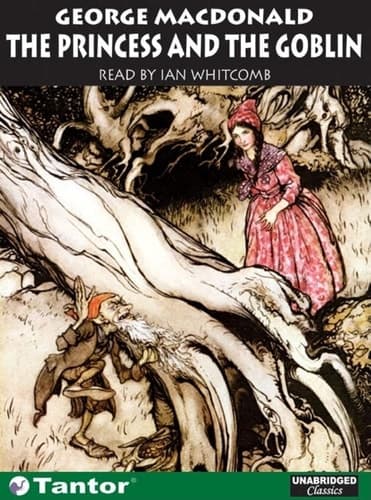
The Princess and the Goblin
by George MacDonald
This might seem like a departure—it's fantasy, not sci-fi—but Addison does something Adams would appreciate: she takes the bureaucratic absurdity of court politics and treats it with the same meticulous, slightly bewildered attention Arthur brings to the universe. The protagonist is constantly overwhelmed by systems he doesn't understand, and the humor comes from his genuine attempts to be decent in an indifferent institutional world.
View book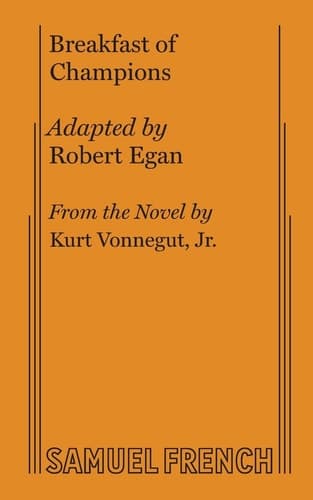
Breakfast of Champions
by Jr. Kurt Vonnegut
Published in 1973, this is your decade-hop—and Vonnegut shares Adams' conviction that the universe is fundamentally ridiculous and that the only sane response is dark comedy mixed with genuine compassion. Both authors interrupt their narratives to comment on the absurdity of existence itself, and both use science fiction trappings to ask why anything matters when everything is equally meaningless and equally precious.
View bookThe Princess and the Goblin
by George MacDonald
Kingfisher (Ursula Vernon's pen name) writes fantasy adventure with the same wry, digressive narrative voice and tendency toward unexpected tenderness that Adams uses—her characters are frequently confused, frequently kind, and frequently discovering that the world is stranger than they assumed. She has that same gift for making you care about people while simultaneously finding their predicaments hilarious.
View bookAbout douglas adams
D
douglas adams
1952–2001
Douglas Adams was born in Cambridge in March 1952. He was creator of all the various manifestations of *The Hitchhiker's Guide to the Galaxy*. Douglas died unexpectedly in May 2001 of a sudden heart attack at the age of 49.
View author page