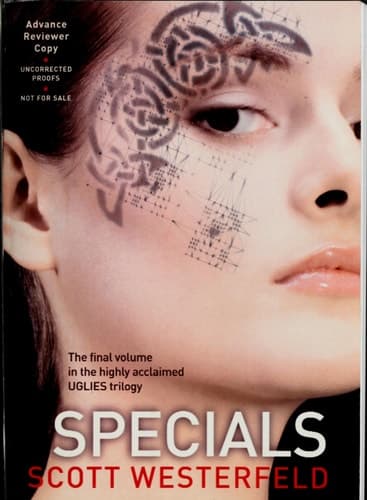
Synopsis
"Special Circumstances":The words have sent chills down Tally's spine since her days as a repellent, rebellious ugly. Back then Specials were a sinister rumor -- frighteningly beautiful, dangerously strong, breathtakingly fast. Ordinary pretties might live their whole lives without meeting a Special. But Tally's never been ordinary.And now she's been turned into one of them: a superamped fighting machine, engineered to keep the uglies down and the pretties stupid.The strength, the speed, and the clarity and focus of her thinking feel better than anything Tally can remember. Most of the time. One tiny corner of her heart still remembers something more.Still, it's easy to tune that out -- until Tally's offered a chance to stamp out the rebels of the New Smoke permanently. It all comes down to one last choice: listen to that tiny, faint heartbeat, or carry out the mission she's programmed to complete. Either way, Tally's world will never be the same.
Recommendations
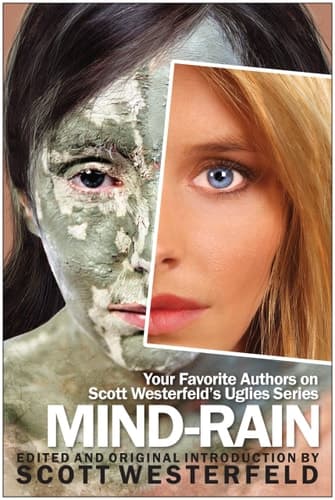
Mind-Rain Your Favorite Authors on Scott Westerfeld's Uglies Series
by Scott Westerfeld
Wait—I know you just finished Specials, but if you haven't read the first book in the series, start here. The way Westerfeld plants clues about the true nature of the pretty transformation in Tally's early observations creates that same slow-burn realization you get in Specials, except you'll catch details you missed the first time through.
View book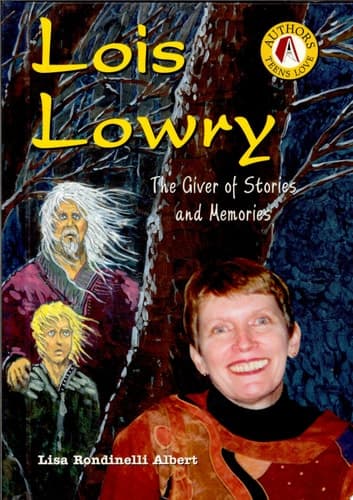
Lois Lowry The Giver of Stories and Memories
by Lisa Rondinelli Albert
Published in 1993, this is your bridge to how dystopian YA used to work before Westerfeld's high-octane style took over. Like Specials, it's about a protagonist discovering that their seemingly perfect society is built on a horrifying foundation—but Lowry achieves her chills through absence and silence rather than action sequences. The emotional gut-punch lands differently, and it'll make you appreciate how Westerfeld uses sensory overload as a control mechanism.
View book
The Limits of Leviathan Contract Theory and the Enforcement of International Law
by Robert E. Scott
This one's a curveball—it's adult fantasy noir rather than YA sci-fi, but Lynch does something Westerfeld does brilliantly: he creates a protagonist who's been shaped by their world's systems (in this case, a con-artist's training) and then forces them to question everything they've been taught to value. The prose is denser and the stakes feel more morally complicated, but that core tension between programming and free will is identical.
View book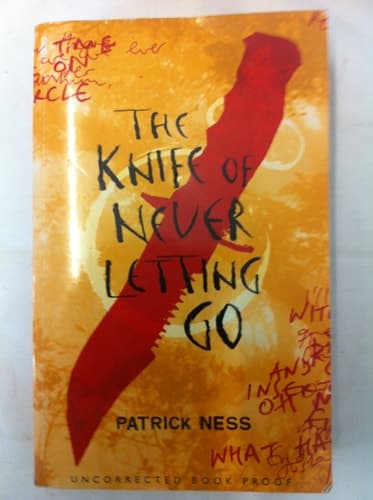
The Knife of Never Letting Go
by Patrick Ness
Ness writes action sequences with the same kinetic intensity as Westerfeld, but he pairs them with a protagonist whose internal monologue is fractured and unreliable in ways that mirror Tally's struggle between her programming and her conscience. The way Todd's thoughts literally can't be hidden from the reader creates an intimacy that makes his moral choices feel urgent in a way that's distinctly different from Specials' external focus.
View book
Perdido Street Station
by China Miéville
Here's where I really stretch: Miéville's world-building operates on the same principle as Westerfeld's—show the reader a society's rules through how people move through it, then gradually reveal the horror underneath. But instead of sleek future cities, you get a grimy, baroque metropolis where the control systems are biological and cultural rather than surgical. If you loved the moment in Specials where you realize how thoroughly the system has colonized everyone's thinking, this book will give you that same vertigo, just expressed through completely different aesthetics.
View bookAbout Scott Westerfeld
S
Scott Westerfeld
Born 1963
Biography coming soon.
View author page