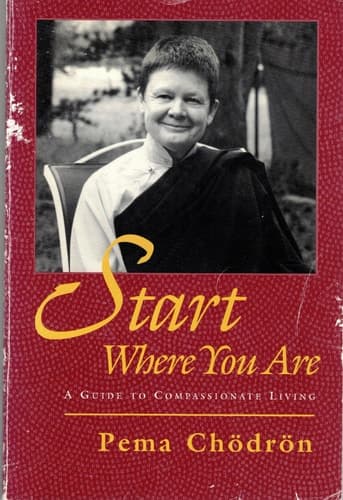
Start where You are A Guide to Compassionate Living
Pema ChödrönPublished1994
Pages154
Formatpaperback
PublisherShambhala
Synopsis
"Start Where You Are" is an indispensable handbook for cultivating fearlessness and awakening a compassionate heart. With insight and humor, Pema Chodron, author of "The Wisdom of No Escape" and "When Things Fall Apart," presents down-to-earth guidance on how to make friends with ourselves and develop genuine compassion toward others. The author shows how we can "start where we are" by embracing rather than denying the painful aspects of our lives. Pema Chodron frames her teachings on compassion around fifty-nine traditional Tibetan Buddhist maxims, or slogans, such as: "Always apply a joyful state of mind" "Don't seek others' pain as the limbs of your own happiness" "Always meditate on whatever provokes resentment" "Be grateful to everyone" Working with these slogans and through the practice of meditation, "Start Where You Are" shows how we can all develop the courage to work with our own inner pain and discover joy, well-being, and confidence.
Recommendations
The Year of Magical Thinking A Play by Joan Didion Based on Her Memoir
by Joan Didion
Where Pema teaches you to befriend your pain through Buddhist practice, Didion does something rawer—she documents her own grief with unflinching clarity and discovers that sitting with unbearable loss is sometimes the only honest response. Both writers refuse to offer false comfort, instead showing how acknowledging what's broken can lead to unexpected resilience.
View book
The Courage to be
by Paul Tillich
This Japanese dialogue between a philosopher and a young man tackles the same territory as Pema—how to live authentically and free yourself from the weight of others' judgments—but through Socratic conversation rather than meditation. It's Adlerian psychology meeting Buddhist compassion, and the back-and-forth format makes abstract ideas feel immediately applicable to your own stuck patterns.
View book
Friendship Bands Braiding, Weaving, Knotting
by Marlies Busch
Kimmerer extends Pema's compassion outward—from ourselves and other people to the living world itself. She writes as a botanist and Potawatomi woman, weaving indigenous wisdom with scientific observation, showing how gratitude and reciprocity aren't just spiritual practices but ecological necessities. It's contemplative like Pema but rooted in the tangible, growing world.
View book
The Midnight Library A Novel
by Matt Haig
This is your surprise pick—it reads like uplifting contemporary fiction, but it's genuinely about the Pema principle of starting where you are. The protagonist discovers that regret and self-rejection are the real prisons, and that accepting your actual life (with all its messiness) is the doorway to peace. It's lighter in tone than Pema, almost whimsical, but the emotional work is identical.
View book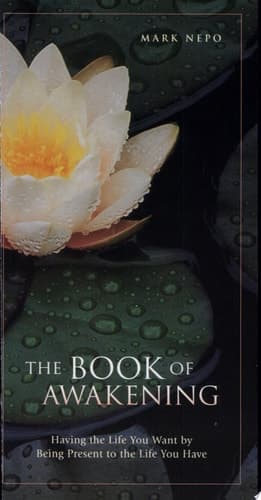
The Book of Awakening Having the Life You Want by Being Present to the Life You Have
by Mark Nepo
Where Pema gives you fifty-nine slogans to meditate on, Nepo offers 365 daily reflections that feel like conversations with a wise friend. His writing is more lyrical and less explicitly Buddhist, drawing from poetry, Sufism, and personal experience, but he's asking the same question Pema does: how do we wake up to our own lives instead of sleepwalking through them? It's a gentler companion for deepening the work you've started.
View bookAbout Pema Chödrön
Biography coming soon.
View author page