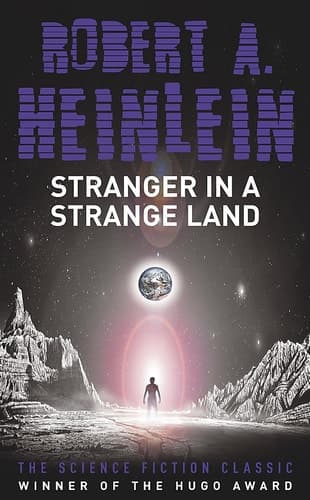
Stranger in a Strange Land
Robert Anson HeinleinPublished2005
Pages655
Formatpaperback
PublisherHodder & Stoughton
Synopsis
Stranger in a Strange Land is a 1961 science fiction novel by American author Robert A. Heinlein. It tells the story of Valentine Michael Smith, a human who comes to Earth in early adulthood after being born on the planet Mars and raised by Martians. The novel explores his interaction with—and eventual transformation of—terrestrial culture. The title is an allusion to the phrase in Exodus 2:22. According to Heinlein, the novel's working title was The Heretic. Several later editions of the book have promoted it as "The most famous Science Fiction Novel ever written".
Recommendations
Dreamer of Dune The Biography of Frank Herbert
by Brian Herbert
Like Heinlein, Herbert builds an entire civilization from the ground up with its own politics, religion, and ecology—but where Smith transforms Earth through spiritual awakening, Paul Atreides must navigate a world where his messianic potential becomes a trap. Both novels spend considerable time on the *mechanics* of how an outsider's perspective reshapes society, rather than just the emotional beats.
View book
Ursula K. Le Guin's the Left Hand of Darkness (Modern Critical Interpretations)
by Unknown
Le Guin does what Heinlein attempted with gender and sexuality, but with anthropological rigor—her protagonist must unlearn his assumptions about an alien culture just as Smith must unlearn Earth's. The novel's real tension comes from the slow, uncomfortable process of recognizing your own biases, which gives it an intellectual edge that complements Heinlein's more utopian vision.
View book
Ficciones
by Jorge Luis Borges
This is the curveball—Borges writes short stories, not sprawling novels—but his obsession with alternate realities, hidden knowledge systems, and the nature of belief itself runs parallel to Heinlein's exploration of how ideas reshape reality. Where Heinlein gives you a full narrative, Borges gives you the *architecture* of impossible worlds in miniature, and the effect is oddly similar: you finish disoriented and reconsidering what you thought was real.
View book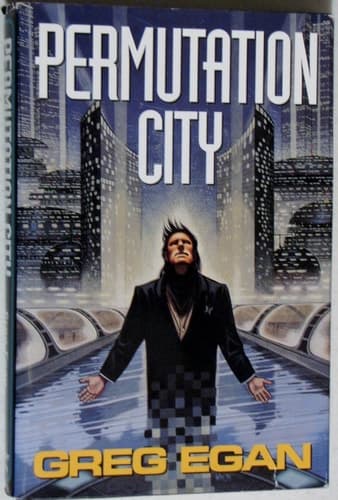
Permutation City
by Greg Egan
Egan takes the question 'what does it mean to be human?' and pushes it into digital consciousness and simulated realities—essentially asking what Smith would ask if he were made of code instead of Martian-raised flesh. It's denser and more mathematically rigorous than Heinlein, but shares that same commitment to exploring identity through speculative premises rather than action-adventure.
View book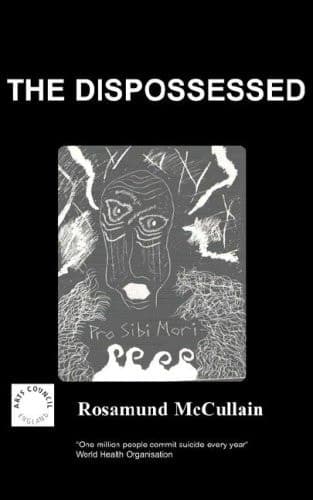
The Dispossessed
by R. Mccullain
Delany constructs two opposing political systems and forces his protagonist to live between them, experiencing both utopia and dystopia from the inside—much like Smith experiences Earth's contradictions. But where Heinlein's solution tends toward synthesis and transcendence, Delany is more interested in the *irresolvable tensions* between competing visions of the good life, which gives the novel a harder, more mature edge.
View bookAbout Robert Anson Heinlein
Robert Anson Heinlein was an American science fiction writer. Often called "the dean of science fiction writers", he was one of the most popular, influential, and controversial authors of the genre. He set a high standard for science and engineering plausibility and helped to raise the genre's standards of literary quality. He was one of the first writers to break into mainstream, general magazines such as The Saturday Evening Post, in the late 1940s, with unvarnished science fiction. He was among the first authors of bestselling, novel-length science fiction in the modern, mass-market era. For many years, Heinlein, Isaac Asimov, and Arthur C. Clarke were known as the "Big Three" of science fiction. ([Source](http://en.wikipedia.org/wiki/Robert_A._Heinlein).)
View author page