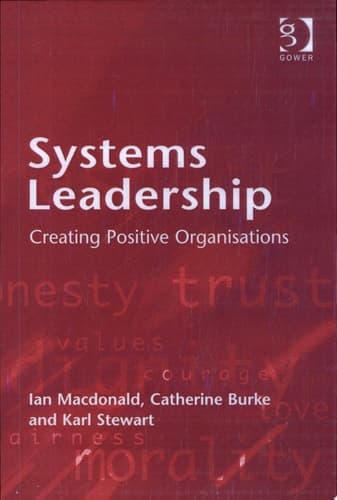
Systems Leadership Creating Positive Organizations
Ian MacDonaldPublished2006
Pages291
Formathardcover
PublisherGower Publishing, Ltd.
Synopsis
This book is concerned with how people come together to achieve a productive purpose. Human survival has always depended upon our ability to form and sustain social organisations. People have a deep need to be creative and to belong. By creating positive organisations we can fulfil these needs and build a worthwhile society. Such organisations do not occur by chance; a positive organisation is created by the hard work of leaders and members and influenced by the way the organisation is designed, especially its systems. All this needs to be based on an understanding of sound, general principles of behaviour. This book outlines that work; how to build a positive organisation in terms of general principles and practical examples. Understanding and applying this work requires discipline (not dogma) and creativity. The authors show the significant positive results that can be achieved and detail a range of case studies. Unlike some books which are based on goals, objectives or visions this book concentrates on how this can be achieved. The authors observed and engaged with what good leaders and members actually do and have endeavoured to distil the essence of productive relationships based on core, human values. This work has been applied in businesses, social service agencies, hospitals, city governments, national governments, armies, churches, public utilities, indigenous communities, schools and other unique organisations. It is intended to help leaders create more humane and productive organisations that can both meet their objectives and improve the human condition. It does so by presenting a coherent theory exemplified by numerous cases and practical experience. As more than one leader has commented, 'this stuff actually works'. The CD supplied with the book contains 11 case studies which look at the application of systems leadership techniques in a range of organisational contexts.
Recommendations
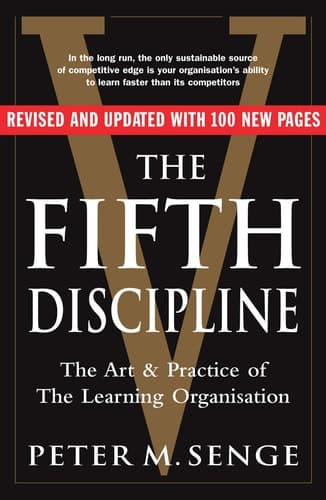
The Fifth Discipline The Art and Practice of the Learning Organization
by Peter M. Senge
Where MacDonald focuses on the human principles that make organizations work, Senge digs into the structural thinking patterns that either enable or sabotage those principles. You'll recognize the same commitment to practical application over theory, but Senge gives you the mental models framework for understanding *why* those systems leadership techniques actually stick—particularly his work on how organizations learn (or fail to) from their own experience.
View book
Reinventing Organization Development New Approaches to Change in Organizations
by David L. Bradford
Laloux takes the DNA of what MacDonald describes—organizations built on human values and creative belonging—and shows you what happens when you actually push those principles to their logical extreme. The book is structured around real organizations (Buurtzorg, Morning Star, Patagonia) that have fundamentally reimagined hierarchy itself. It's less about 'how to lead better' and more about 'what becomes possible when you design for human flourishing from the ground up.'
View book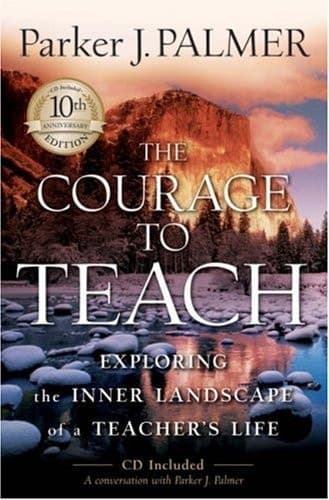
The Courage to Teach: Exploring the Inner Landscape of a Teacher's Life
by Parker J. Palmer
This is my slight curveball for you—it's ostensibly about teaching, but Palmer is really writing about how any leader creates spaces where people can do their best work and become more fully themselves. His writing is more reflective and philosophical than MacDonald's, but he's wrestling with the exact same question: how do we build communities (whether classrooms, organizations, or congregations) where people's need to belong and create actually gets honored? You'll find his framework on 'the hidden wholeness' deeply complements MacDonald's systems approach.
View book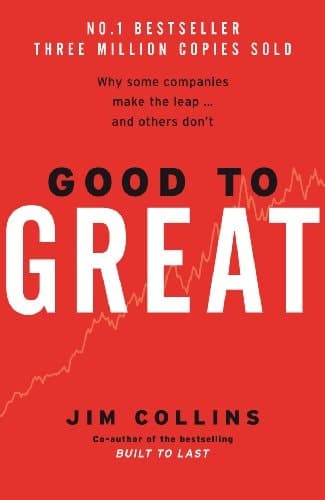
Good to Great Why Some Companies Make the Leap ... and Others Don't
by James Charles Collins
Collins spent years studying what separates organizations that genuinely sustain excellence from those that plateau or decline, and his findings are grounded in meticulous research rather than consultant ideology. Where MacDonald gives you the principles, Collins shows you the specific disciplines and structural choices that separate the organizations that *actually maintain* that positive culture over decades. His concept of 'getting the right people on the bus' echoes MacDonald's emphasis on how people relate, but with a harder edge about accountability.
View bookAbout Ian MacDonald
I
Ian MacDonald
Born 1928
Biography coming soon.
View author page