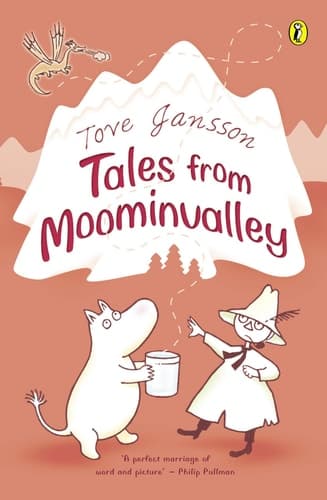
Tales from Moominvalley
Tove JanssonPublished1973
Pages176
Formatpaperback
PublisherPenguin Books Limited
Synopsis
If you found a tiny golden dragon with green paws, would you know what to do with it? Well, Moomintroll thinks he knows what to do. But when he takes his new-found pet home, things don't quite work out as planned!
Recommendations
The Phantom Tollbooth
by Norton Juster
Like Jansson, Juster creates a world where the impossible is treated with matter-of-fact acceptance—a boy drives through a tollbooth into kingdoms where puns are currency and demons are bureaucratic nuisances. Both authors share that particular gift of making readers feel like they've stumbled into a world that's been running perfectly well without them, and now they're just trying to keep up with the logic of it.
View book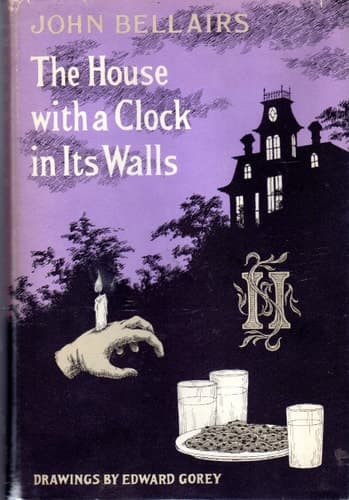
The House with a Clock in Its Walls
by John Bellairs
Bellairs has that same cozy-but-eerie atmosphere Jansson perfects—a young boy arrives at his uncle's house and discovers it's full of magical secrets, but the magic feels lived-in and slightly melancholic rather than triumphant. The pacing mirrors Moominvalley's gentle accumulation of strangeness: you're never quite sure if something wonderful or unsettling is about to happen.
View book
The Apocalyptic Vision of Mikhail Bulgakov's the Master and Margarita (Studies in Slavic Language & Literature)
by Edward E. Ericson
This might seem like a leap from Moomins, but stay with me: Bulgakov does something Jansson also does brilliantly—he lets chaos and the supernatural simply *exist* in the everyday world without explaining them away. A devil shows up in Soviet Moscow the way a golden dragon shows up in Moominvalley, and everyone has to figure out how to live with it. It's surreal but grounded, funny but with real stakes underneath.
View book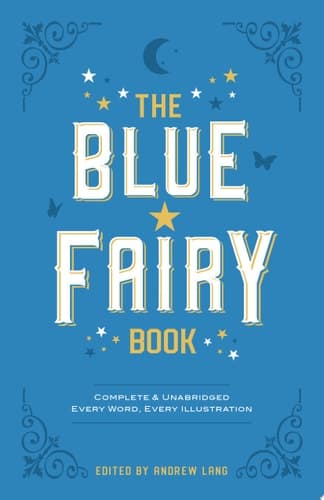
The Blue Fairy Book
by Andrew Lang
Published in 1889, this collection predates Jansson but shares her sensibility: fairy tales where the world operates on dream-logic, where a character might encounter something extraordinary and simply proceed with the problem at hand. Lang's stories have that same quality of treating the magical as mundane—no lengthy explanations, just 'here's a dragon, now what?'
View book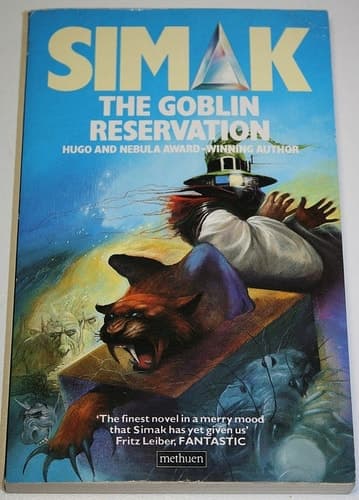
The Goblin Reservation
by Clifford D. Simak
Here's your science fiction curveball: Simak writes about a university that preserves magical creatures and mythological beings in a nature preserve, and a professor who wakes up to find himself transformed. It has Jansson's gentle humor about how creatures (magical or otherwise) simply *are*, and how humans must adapt rather than control. The tone is wry and accepting rather than action-driven—very much in Jansson's spirit, just with a speculative fiction wrapper.
View bookAbout Tove Jansson
T
Tove Jansson
1914–2001
Finnish novelist, painter, and professor of philosophy, best known for the <i>Moomin</i> books.
View author page