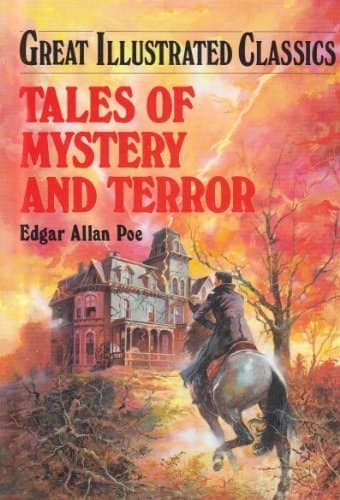
Tales of Mystery and Terror
Edgar Allan PoePublished1994
Pages240
FormatSchool & Library Binding
PublisherABDO Publishing Company
Synopsis
The world's best-loved children's stories set in large type for easy reading.
Recommendations
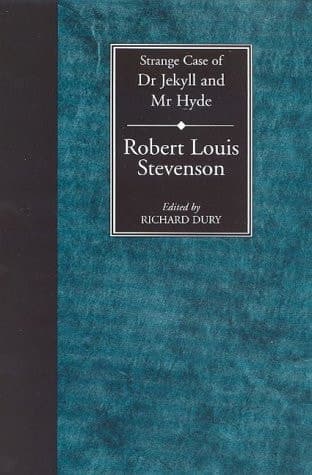
Strange Case of Dr. Jekyll and Mr. Hyde (The Collected Works of Robert Louis Stevenson)
by Robert Louis Stevenson
Stevenson crafts psychological terror through a narrator's gradual realization that something is fundamentally wrong—much like how Poe builds dread through unreliable perspective and the uncanny. Both authors understand that the scariest moments happen in the reader's mind before anything explicitly terrible appears on the page.
View book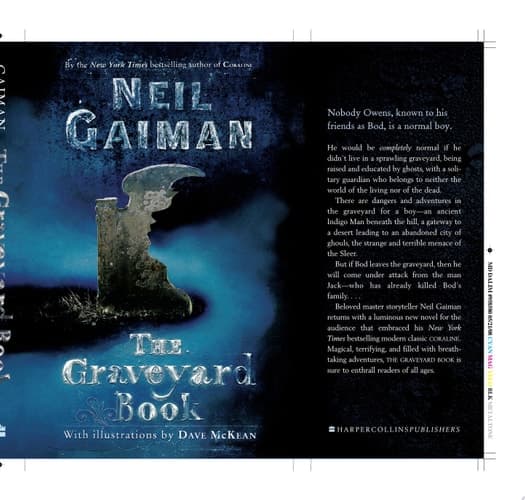
The Graveyard Book
by Neil Gaiman
Gaiman takes the macabre elements Poe loved—ghosts, graveyards, death itself—but treats them with a warmth and wonder that makes them feel protective rather than purely terrifying. If you appreciated Poe's ability to make the strange feel vivid and real, you'll find Gaiman does something similar but with a gentler hand that doesn't diminish the mystery.
View book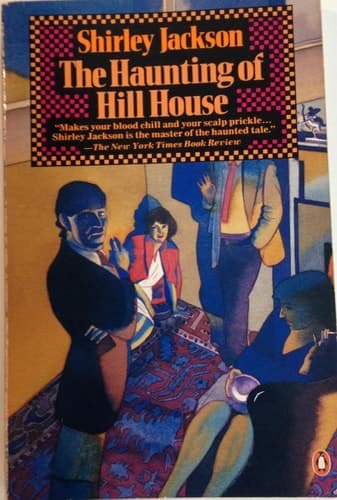
The Haunting of Hill House
by Shirley Jackson
Jackson writes psychological suspense with the precision of someone studying how fear actually works in the human mind. Where Poe uses atmosphere and symbolism, Jackson uses the mundane details of daily life—a cold hallway, a locked door—to create an unease that lingers long after you finish reading.
View book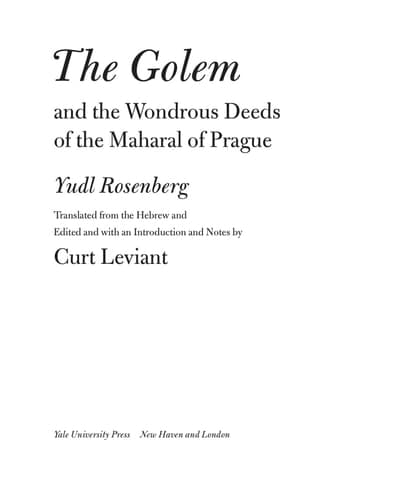
The Golem and the Wondrous Deeds of the Maharal of Prague
by Yudl Rosenberg
Here's your surprise pick: this is historical fiction set in 1900s New York, but it carries that same sense of the uncanny and mysterious that Poe mastered—two impossible beings navigating a world that doesn't quite understand them. It's proof that gothic sensibility doesn't require castles or fog; it just requires characters caught between worlds.
View book
Mexican
by Elisabeth Lambert Ortiz
Moreno-Garcia builds her horror the way Poe does—through atmosphere, family secrets, and a house that feels almost like a character itself. Published in 2020, it shows how Poe's techniques remain potent when applied to new settings and perspectives, proving that his influence on the genre hasn't faded.
View bookAbout Edgar Allan Poe
E
Edgar Allan Poe
1809–1849
Edgar Allan Poe was an American writer, poet, editor and literary critic, considered part of the American Romantic Movement. Best known for his tales of mystery and the macabre, Poe was one of the earliest American practitioners of the short story and is considered the inventor of the detective-fiction genre. He is further credited with contributing to the emerging genre of science fiction.[1] He was the first well-known American writer to try to earn a living through writing alone, resulting in a financially difficult life and career.[2] Source and more information: https://en.wikipedia.org/wiki/Edgar_Allan_Poe
View author page