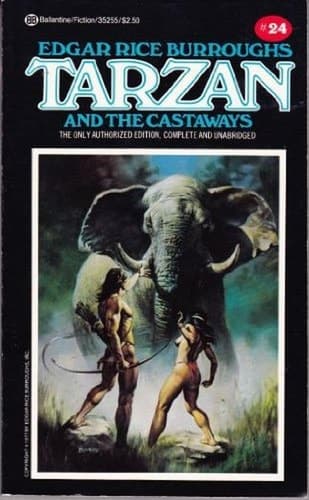
Tarzan and the Castaways
Edgar BurroughsPublished1987
Pages191
Formatpaperback
PublisherRandom House Publishing Group
Synopsis
MINOR WEAR ON EDGES OF SPINE. NAME INSIDE FRONT COVER. NO WRITING OR MARKS ON PAGES.
Recommendations
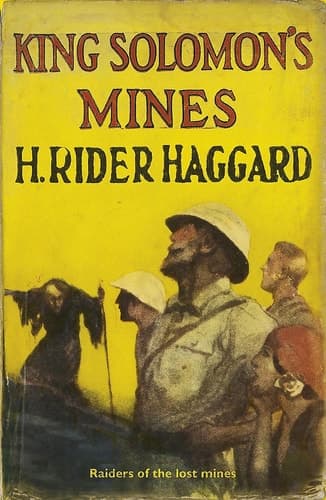
King Solomon's Mines
by H. Rider Haggard
Haggard's 1885 adventure novel shares Burroughs' gift for making impossible landscapes feel tangible—lost cities, uncharted territories, and the tension between civilization and wilderness. Where Tarzan finds himself *in* the jungle, Haggard's protagonists are outsiders discovering it, which gives you a fresh angle on the same intoxicating sense of exploration and danger.
View book
Shadow of the Wind
by Carlos Ruiz Zafon
This is the curveball recommendation, but hear me out: Zafón builds mystery and atmosphere the way Burroughs builds jungle sequences—through sensory immersion and the gradual revelation of hidden worlds. Instead of vines and wildlife, you're navigating post-Civil War Barcelona's labyrinthine streets and a forgotten library. Both writers make you *feel* lost in their worlds, and both reward your patience with unexpected connections.
View book
H. Rider Haggard She, King Solomon's Mine and Allan Quartermain
by Henry Rider Haggard
Wait—I know I just recommended Haggard, but this is a different beast entirely. While *King Solomon's Mines* is straightforward adventure, *She* has that same pulpy energy as Tarzan but with genuinely eerie mythology woven through. The lost civilization angle, the immortal ruler, the sense that you're discovering something that shouldn't exist—it's Burroughs' sense of wonder married to something darker and more unsettling.
View book
The Jungle Book
by Rudyard Kipling
Published in 1894, this predates Tarzan by a decade and likely influenced Burroughs directly. Kipling's Mowgli shares Tarzan's fundamental appeal—a human raised by and belonging to the wild—but Kipling's prose is tighter, his animal characters have genuine personality, and there's a melancholy undercurrent about belonging nowhere completely. It's the spiritual ancestor of what Burroughs was doing.
View book
The Monk
by Matthew Gregory Lewis
This 1796 Gothic novel might seem wildly different—it's set in Spain, not Africa, and concerns itself with supernatural corruption rather than physical adventure. But Lewis shares Burroughs' talent for pacing: the way he builds dread and momentum, the way he moves between multiple storylines without losing you, and his complete lack of self-consciousness about melodrama. If you want that propulsive, page-turning quality in a completely different register, this delivers.
View bookAbout Edgar Burroughs
Biography coming soon.
View author page