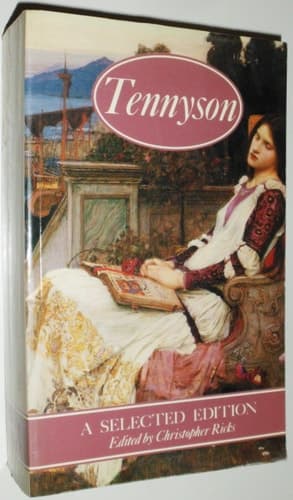
Tennyson A Selected Edition
Alfred Tennyson Baron TennysonPublished1989
Pages1032
Formatpaperback
PublisherUniversity of California Press
Synopsis
This is the only fully annotated and comprehensive selection of Tennyson’s poetry. It provides teachers, students, and the general reader with an affordable paperback of the central body of the work which the Sunday Telegraph described as "the best edition this century of the best poet of the last century.”
Recommendations
The Prelude and Selected Poems, William Wordsworth Notes by Martin Gray
by Martin Gray
Since you've just spent time with Tennyson's annotated reflections on memory, mortality, and the poet's own development, Wordsworth's autobiographical epic offers a natural companion—it's essentially the spiritual predecessor to everything Tennyson was doing. Both poets are obsessed with how the mind transforms experience into art, and Wordsworth's blank verse has that same meditative, conversational quality that makes Tennyson's longer narratives so absorbing.
View book
The Moonstone, by Wilkie Collins
by Jean-Pierre Naugrette
Here's your surprise pick: Collins was Tennyson's contemporary, and this novel has the same Victorian obsession with narrative structure and psychological complexity that animates Tennyson's dramatic monologues. The way Collins layers multiple narrators and unreliable perspectives creates that same tension between surface propriety and hidden depths you find in poems like 'Maud'—except here it's a mystery that keeps you genuinely guessing.
View book
T. S. Eliot and the Ideology of Four Quartets
by John Xiros Cooper
Eliot was obsessed with Tennyson (he wrote criticism about him), and these interconnected poems show what happens when you take Tennyson's meditations on time, loss, and spiritual searching and compress them into modernist density. The way Eliot circles back to the same images and questions across the four sections mirrors how Tennyson's best work accumulates meaning through repetition and variation—it's like watching the same emotional landscape from different angles.
View book
The Savage Detectives A Novel
by Roberto Bolaño
This one's genuinely left-field, but stay with me: Bolaño's novel is fundamentally about obsessive readers and writers chasing meaning through fragmented texts and unreliable accounts—much like you've just been doing with Tennyson's annotations. The novel's structure (diary, interviews, footnotes) mirrors how you experience an annotated edition, and both works share an almost desperate belief that literature matters, even when (or especially when) it's difficult to pin down.
View book
The Rings of Saturn
by Winfried Georg Sebald
Sebald's prose poem (published 1995, so it gives you a different era) shares Tennyson's elegiac tone and his way of letting historical detail accumulate into something emotionally overwhelming. Both writers understand that you can't separate personal memory from cultural history, and both use digression as a form of truth-telling—Sebald's wanderings through Suffolk have the same meditative, associative quality as Tennyson's longer narratives, where the journey matters more than the destination.
View bookAbout Alfred Tennyson Baron Tennyson
Biography coming soon.
View author page