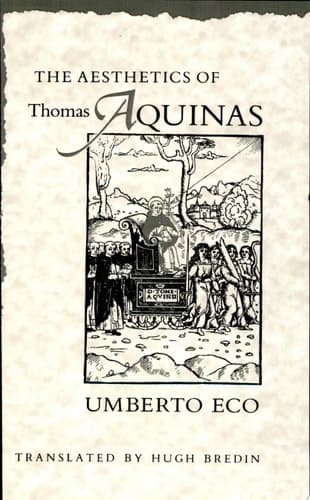
The Aesthetics of Thomas Aquinas
Umberto EcoPublished1988
Pages287
Formatpaperback
PublisherHarvard University Press
Synopsis
The well-known Italian semiotician and novelist Umberto Eco discloses for the first time to English-speaking readers the unsuspected richness, breadth, complexity, and originality of the aesthetic theories advanced by the influential medieval thinker Thomas Aquinas, heretofore known principally as a scholastic theologian. Inheriting his basic ideas and conceptions of art and beauty from the classical world, Aquinas transformed or modified these ideas in the light of Christian theology and of developments in metaphysics and optics during the thirteenth century.
Setting the stage with an account of the vivid aesthetic and artistic sensibility that flourished in medieval times, Eco examines Aquinas's conception of transcendental beauty, his theory of aesthetic perception or visio, and his account of the three conditions of beauty--integrity, proportion, and clarity--that, centuries later, emerged again in the writings of the young James Joyce. He examines the concrete application of these theories in Aquinas's reflections on God, mankind, music, poetry, and scripture. He discusses Aquinas's views on art and compares his poetics with Dante's. In a final chapter added to the second Italian edition, Eco examines how Aquinas's aesthetics came to be absorbed and superseded in late medieval times and draws instructive parallels between Thomistic methodology and contemporary structuralism. As the only book-length treatment of Aquinas's aesthetics available in English, this volume should interest philosophers, medievalists, historians, critics, and anyone involved in poetics, aesthetics, or the history of ideas.
Recommendations
Generating recommendations…
Our AI is preparing recommendations for The Aesthetics of Thomas Aquinas. This usually takes under a minute.
About Umberto Eco
U
Umberto Eco
1932–2016
Umberto Eco (5 January 1932 – 19 February 2016) was an Italian novelist, literary critic, philosopher, semiotician, and university professor. He is widely known for his 1980 novel Il nome della rosa (The Name of the Rose), a historical mystery combining semiotics in fiction with biblical analysis, medieval studies, and literary theory. He later wrote other novels, including Il pendolo di Foucault (Foucault's Pendulum) and L'isola del giorno prima (The Island of the Day Before). His novel Il cimitero di Praga (The Prague Cemetery), released in 2010, topped the bestseller charts in Italy. Eco also wrote academic texts, children's books, and essays, and edited and translated into Italian books from French, such as Raymond Queneau’s “Exercises in Style” (1983). He was the founder of the Department of Media Studies at the University of the Republic of San Marino,[3] president of the Graduate School for the Study of the Humanities at the University of Bologna, member of the Accademia dei Lincei, and an honorary fellow of Kellogg College, Oxford.
View author page