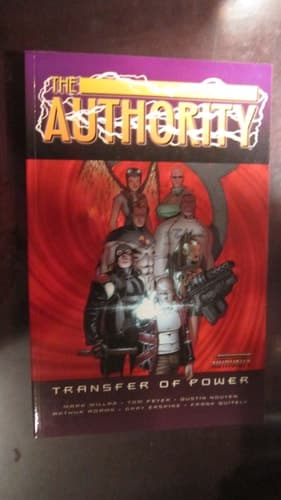
The Authority, Transfer of Power
Mark MillarPublished2002
Pages190
Formatpaperback
PublisherWildStorm Productions
Synopsis
The Authority are dead; slaughtered by Seth, the former farmer with more than 1,000 super powers. In their place are an establishment-approved version of the Authority - The Colonel, Rush, The Machine, Street, The Professor, Teuton and Last Call - and they seek nothing more than to destroy the work the Authority have been doing...but there are pieces missing in the puzzle. Where is the Midnighter's body? What happened to the incredibly powerful child, Jenny Quantum? And who is going to close the hole in the Bleed that threatens the entire multiverse? This bitingly satirical, all-action collection has the answers: and they'll change the world as you know it!
Recommendations

Planetary: Leaving The 20th Century
by Warren Ellis
Ellis shares Millar's gift for deconstructing superhero mythology through a lens of dark satire, but Planetary does it by having your protagonists uncover hidden histories of the superhero genre itself. Where Transfer of Power asks 'what if the replacement heroes were corrupt?', Ellis asks 'what if everything we knew about superheroes was a lie?' - the same bitingly clever tone, but aimed at the medium's own DNA.
View book
Smart Daaf Boys Vol. II The Inventors of Radio and Television and Nathan B. Stubblefield
by Troy Cory
Ennis takes the premise you just loved - corrupt, establishment-approved 'heroes' - and runs it through a grittier, more visceral lens with a team of ordinary people fighting back. The Authority's replacement team would feel right at home in Ennis's world, where superpowers are treated as weapons of political control rather than moral absolutes.
View book
Flex Ability A Story of Strength and Survival
by Flex Wheeler
Here's your genre-shift: this is urban fantasy noir rather than superhero comics, but it shares Transfer of Power's obsession with the cost of power and the question of who gets to decide what's 'right.' Steinmetz writes about people who can bend reality through obsession, and the bureaucratic nightmare that follows - it's got that same satirical edge about institutions trying to control the uncontrollable.
View book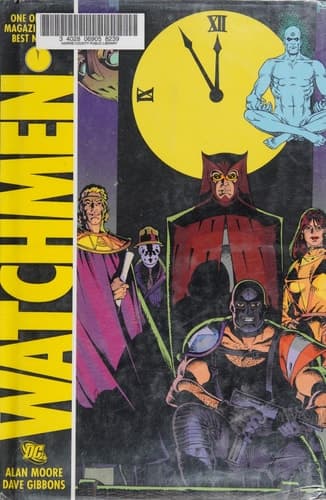
Watchmen
by Alan Moore
I know this feels obvious, but Moore's 1986 masterpiece does something Transfer of Power builds on: it asks what happens when superheroes stop being symbols and start being political actors with their own agendas. The difference is Moore's asking it with the weight of Cold War paranoia, while Millar's asking it with 2000s snark - both are interrogating whether heroes can ever truly serve the public good.
View book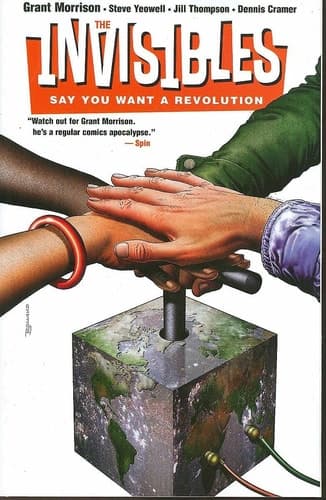
The Invisibles Counting to None
by Grant Morrison
Morrison's anarchist superhero epic from the 1990s shares Millar's interest in resistance movements and reality-bending threats (that hole in the Bleed would fit right into Morrison's cosmology), but Morrison approaches it from the counterculture's perspective rather than the establishment's. It's equally ambitious and chaotic, but where Millar's satirizing institutional power, Morrison's celebrating those who reject it entirely.
View bookAbout Mark Millar
M
Mark Millar
Born 1969
Biography coming soon.
View author page