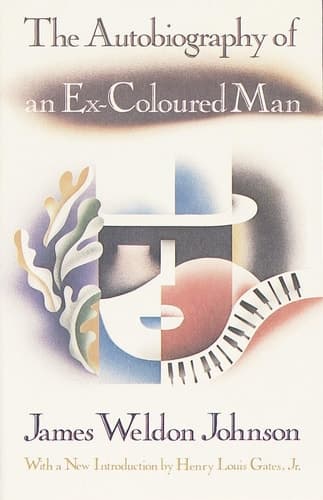
The Autobiography of an Ex-Coloured Man: With an Introduction by Henry Louis Gates, Jr.
James Weldon JohnsonPublished1989
Pages256
Formatpaperback
PublisherVintage
Synopsis
First published anonymously in 1912, this resolutely unsentimental novel gave many white readers their first glimpse of the double standard -- and double consciousness -- that ruled the lives of black people in modern America. Republished in 1927, at the height of the Harlem Renaissance, with an introduction by Carl Van Vechten, The Autobiography of an Ex-Coloured Man became a groundbreaking document of Afro-American culture; the first first-person novel ever written by a black, it became an eloquent model for later novelists ranging from Zora Neale Hurston to Richard Wright and Ralph Ellison.
Narrated by a man whose light skin enables him to "pass" for white, the novel describes a journey through the strata of black society at the turn of the century -- from a cigar factory in Jacksonville to an elite gambling club in New York, from genteel aristocrats to the musicians who hammered out the rhythms of ragtime. The Autobiography of an Ex-Coloured Man is a complex and moving examination of the question of race and an unsparing look at what it meant to forge an identity as a man in a culture that recognized nothing but color.
Recommendations
Generating recommendations…
Our AI is preparing recommendations for The Autobiography of an Ex-Coloured Man: With an Introduction by Henry Louis Gates, Jr.. This usually takes under a minute.
About James Weldon Johnson
J
James Weldon Johnson
1873–1954
John Rosamond Johnson (August 11, 1873 – November 11, 1954; usually referred to as J. Rosamond Johnson)[1] was an American composer and singer during the Harlem Renaissance. Born in Jacksonville, Florida, he had much of his career in New York City. Johnson is noted as the composer of the tune for the hymn "Lift Every Voice and Sing". It was first performed live by 500 Black American students from the segregated Florida Baptist Academy, Jacksonville, Florida, in 1900.[2] The song was published by Joseph W. Stern & Co., Manhattan, New York (later the Edward B. Marks Music Company).[3] -Wikipedia
View author page