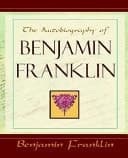
The Autobiography of Benjamin Franklin - 1896
Benjamin FranklinPublished2006
Pages276
Formatpaperback
PublisherStandard Publications, Incorporated
Synopsis
"The Autobiography of Benjamin Franklin has prob ably been more extensively read than any other American historical work, and no other book of its kind has had such ups and downs of fortune. Franklin lived for many years in England, where he was agent for Pennsylvania and other American colonies. He was separated from his family, and it was during one of his long absences, in 1771, that he determined to write an account of his life, which had been an eventful one, for his son William Franklin, then about forty years old. William Franldin had been with his father in England, as the first paragraph of the Autobiography shows, and had been admitted to the bar there, but finding favor at court had been appointed Governor of New Jersey, and was in that position when Franklin was writing. He held to the royal cause and was thereby estranged from his father, though before Benjamin Franklin's death they were partially reconciled."
Recommendations
The Federalist Papers
by Alexander Hamilton
You've just spent time with Franklin's reflections on his practical wisdom and civic contributions—now read the arguments that shaped the very government he helped birth. These papers have that same blend of intellectual rigor and persuasive clarity that makes Franklin's writing so compelling, but they're actively *debating* the future rather than reflecting on the past. It's like watching the founding generation think out loud in real time.
View book
The remains of the day de Kazuo Ishiguro
by Gallix/François
Here's your surprise pick: this 1989 novel shares Franklin's obsession with self-examination and regret, but Ishiguro's narrator is unreliable in ways Franklin never is. Both men are reflecting on lives of service and duty, but where Franklin owns his choices and growth, Stevens is slowly, painfully realizing what he's refused to see. It's a meditation on how we construct our own autobiographies—what we choose to remember and what we conveniently forget.
View book
The Education of Henry Adams
by Henry Adams
Adams wrote his own autobiography a century after Franklin, and he's wrestling with many of the same questions: How do you measure a life? What does progress actually mean? But where Franklin is optimistic and self-made, Adams is skeptical and inherited—he's trying to understand why his education never quite prepared him for the world he actually encountered. It's Franklin's spiritual opposite, which makes it the perfect companion.
View book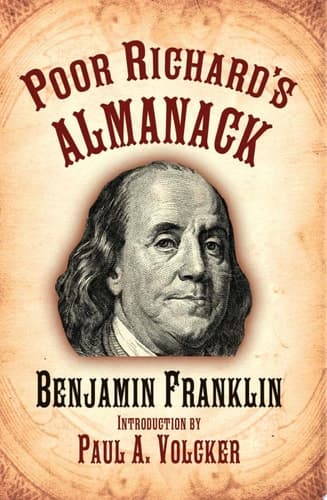
Poor Richard's Almanack
by Benjamin Franklin
I know—same author, but hear me out. You've read Franklin's grand narrative arc; now read the aphorisms and practical wisdom he published year after year for ordinary people. These are the seeds that grew into the autobiography, and they show you how Franklin *thought* in real time, before he was constructing a legacy. It's like seeing his workshop before the finished product.
View book
A Gentleman in Moscow A Novel
by Amor Towles
Towles gives you a protagonist who, like Franklin, is resourceful, charming, and determined to make the best of constrained circumstances—but set him in 1913 Russia under house arrest in a hotel. There's that same quality of Franklin's narrative where a clever man uses wit, observation, and practical ingenuity to navigate an uncertain world, but with a melancholy undertone about time, change, and what gets lost. It's Franklin's optimism filtered through a more modern sensibility about history's cruelties.
View bookAbout Benjamin Franklin
B
Benjamin Franklin
1706–1790
A noted polymath, Franklin was a leading author and printer, political theorist, politician, postmaster, scientist, inventor, satirist, civic activist, statesman, and diplomat.
View author page