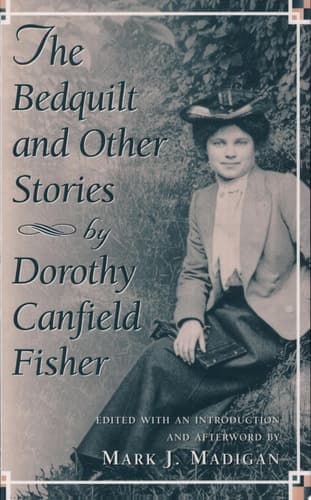
The Bedquilt and Other Stories
Dorothy Canfield FisherPublished1997
Pages234
Formatpaperback
PublisherUniversity of Missouri Press
Synopsis
Dorothy Canfield Fisher, the prolific author of more than forty books, including translations, juveniles, and nonfiction, as well as novels and short-story collections, was one of the most popular and engaging American writers of the first half of the twentieth century. Although her work has been unduly neglected for several decades, it is currently enjoying a revival of critical attention. This colorful collection ranges in subject from New Englanders to the Basques of France to the struggles of African Americans to gain equal rights. Through her stories, many of which received literary awards, Fisher examined the complexities of modern life in the United States and abroad.
In addition to her writing, Fisher had a lifelong involvement in charitable work and social causes--so much so that Eleanor Roosevelt called her one of the most influential women of her time. As one of the earliest and most assertive members of the Book-of-the-Month Club selection committee, Fisher helped define literary taste in America for more than two decades. Mark J. Madigan discusses Fisher's extraordinary life and work in an Introduction and Afterword.
Because of Fisher's rare ability to distinguish enduring concerns from merely topical issues, her work will provide lasting pleasure for generations of readers to come.
Recommendations
The Old Order Stories of the South from Flowering Judas, Pale Horse, Pale Rider and The Leaning Tower
by Katherine Anne Porter
Porter shares Fisher's gift for excavating moral complexity from deceptively quiet moments—her stories about Americans abroad and the interior lives of ordinary people have that same restrained intensity. Like Fisher, she was writing during the same era about social upheaval and personal conscience, but with a slightly more austere, almost modernist sensibility that might surprise you while feeling deeply familiar.
View book
An Edited Edition of Sarah Orne Jewett's The Country of the Pointed Firs
by Sarah Orne Jewett
This is a century earlier than Fisher, but Jewett practically invented the New England character study that Fisher would later perfect. Her sketches of small-town Maine life have that same anthropological warmth—she's genuinely interested in how ordinary people think and endure—and there's an understated feminism running through both authors' work that never announces itself loudly.
View book
The remains of the day de Kazuo Ishiguro
by Gallix/François
Here's the surprise: Ishiguro does what Fisher does with restraint and unspoken emotion, but through a single consciousness observing his own life in retrospect. Both writers understand that the most profound human struggles often happen in the spaces between what people say, and both examine how duty, class, and personal conviction create invisible architecture in ordinary lives. It's Fisher's sensibility filtered through a more contemporary, introspective lens.
View book
Parable of the Sower
by Octavia E. Butler
Butler shares Fisher's unflinching interest in how ordinary people navigate systemic injustice and social fracture—her protagonist is building community and meaning in a collapsing world much the way Fisher's characters do in their smaller crises. What makes this a genuine pairing is that both writers trust their readers to understand that personal resilience and social change are inseparable; neither author needs to explain the stakes.
View book
The Last Leopard: A Life of Giuseppe Tomasi di Lampedusa
by David Gilmour
Lampedusa captures that same bittersweet recognition of historical change moving through individual lives—his Sicilian aristocrat watching his world transform has the quiet dignity of Fisher's New Englanders watching theirs. Both authors write about how people accommodate themselves to forces larger than themselves, and both do it with genuine affection for their characters rather than judgment, which is rarer than you'd think.
View bookAbout Dorothy Canfield Fisher
D
Dorothy Canfield Fisher
1879–1958
Biography coming soon.
View author page