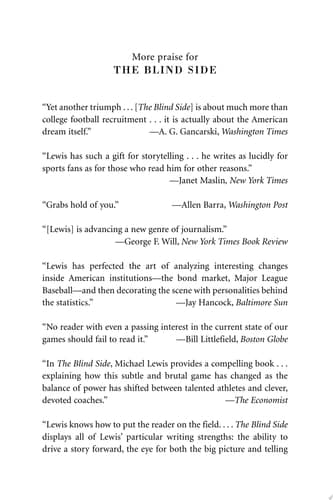
The Blind Side: Evolution of a Game
Michael LewisPublished2007
Pages339
Formatpaperback
PublisherW. W. Norton & Company
Synopsis
It's not a jock book. It's not a sociology book. It's a storybook about modern society, ancient virtues, and the power of love, money and talent to do a little good." -- Jay Hancock, Baltimore Sun
One day Michael Oher will be among the most highly paid athletes in the National Football League. When we first meet him, he is one of thirteen children by a mother addicted to crack; he does not know his real name, his father, his birthday, or how to read or write. He takes up football, and school, after a rich, white, evangelical family plucks him from the streets. Then two great forces alter Oher: the family's love and the evolution of professional football itself into a game in which the quarterback must be protected at any cost. Our protagonist becomes the priceless package of size, speed, and agility necessary to guard the quarterback's greatest vulnerability: his blind side.
This paperback edition contains a brand-new 2007 afterword.
Recommendations
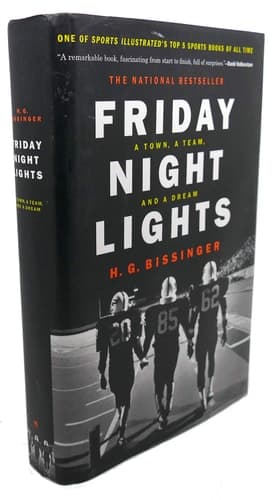
Friday night lights a town, a team, and a dream
by H. G. Bissinger
Bissinger does for Texas high school football what Lewis does for the NFL—he embeds himself in a community and reveals how a single sport becomes the lens through which we understand class, race, and American aspiration. Both authors treat sports as a window into larger social truths rather than as the main event, and both write with the kind of narrative momentum that makes you forget you're reading nonfiction.
View book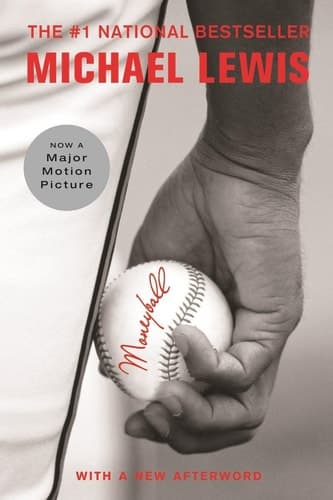
Moneyball The Art Of Winning An Unfair Game
by Michael Lewis
I know—same author—but hear me out: if you loved how *The Blind Side* traces the evolution of a game and the economics that reshape it, *Moneyball* is Lewis doing the exact inverse. Where *Blind Side* shows how one position became priceless, this one shows how an entire sport's valuation system was fundamentally broken and how one team exploited that gap. It's the same analytical eye turned toward a different kind of blindness.
View book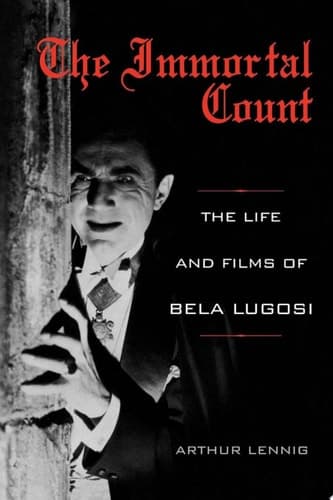
The Immortal Count The Life and Films of Bela Lugosi
by Arthur Lennig
This might seem like a departure, but Skloot does something remarkably similar to Lewis: she takes a person whose name was erased from history and reconstructs not just their story, but the systems—medical, racial, economic—that made their erasure possible. Like Michael Oher, Henrietta Lacks becomes a priceless commodity whose value was extracted without her knowledge or consent, and Skloot examines the love and resilience of family against institutional indifference with the same warmth Lewis brings to the Tuohy family.
View book
Big Star The Short Life, Painful Death, and Unexpected Resurrection of the Kings of Power Pop
by Rob Jovanovic
Another Lewis—I promise this is the last one—but *The Big Short* is essential if you want to see him apply the same investigative lens to financial systems that he applies to football. The book has the same quality of revealing how a complex system (the mortgage market) evolved in ways that made it ripe for catastrophe, and how a handful of people understood the game better than everyone else. It's *Blind Side*'s economic cousin.
View bookAbout Michael Lewis
M
Michael Lewis
Born 1962
Biography coming soon.
View author page