Synopsis
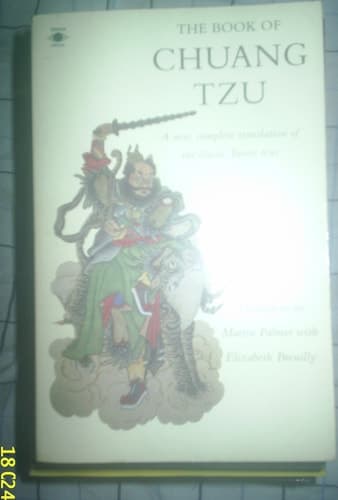
A masterpiece of ancient Chinese philosophy, second in influence only to the "Tao Te Ching" One of the founders of Taoism, Chuang Tzu was firmly opposed to Confucian values of order, control, and hierarchy, believing the perfect state to be one where primal, innate nature rules. Full of profundity as well as tricks, knaves, sages, jokers, unbelievably named people, and uptight Confucians, "The Book of Chuang Tzu" perceives the Taothe Way of Naturenot as a term to be explained but as a path to walk. Radical and subversive, employing wit, humor, and shock tactics, "The Book of Chuang Tzu" offers an intriguing look deep into Chinese culture.
Recommendations
Generating recommendations…
Our AI is preparing recommendations for The Book of Chuang Tzu. This usually takes under a minute.
About Zhuangzi
Zhuang Zhou, commonly known as Zhuangzi (Chinese: 莊子; literally "Master Zhuang"; also rendered as Chuang Tzu), was an influential Chinese philosopher who lived around the 4th century BC during the Warring States period, a period corresponding to the summit of Chinese philosophy, the Hundred Schools of Thought. He is credited with writing—in part or in whole—a work known by his name, the *Zhuangzi*, which is one of the foundational texts of Taoism. **Source**: [Zhuang Zhou](https://en.wikipedia.org/wiki/Zhuang_Zhou) on Wikipedia.
View author page