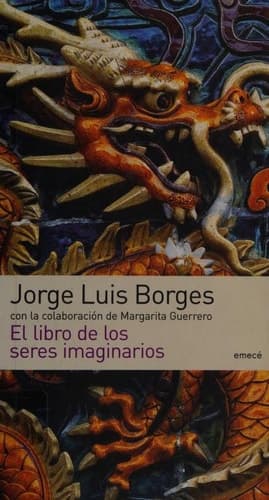
El Libro de Los Seres Imaginarios
Jorge Luis BorgesPublished2005
Pages229
Formatpaperback
PublisherEmece Editores
Synopsis
The master, writing with sometime collaborator Guerrero, compiled 82 one- and two-page descriptions of everything from "The Borametz" (a Chinese "plant shaped like a lamb, covered with golden fleece") to "The Simurgh" ("an immortal bird that makes its nest in the tree of science") and "The Zaratan" (a particularly cunning whale) in An Anthology of Fantastic Zoology in 1954. He added 34 more (and illustrations) for a 1967 edition, giving it the present title, and it was published in English in 1969. This edition, with fresh translations from Borges's Collected Fictions translator Hurley, and new illustrations from Caldecott-winner Sis, gives the beings new life. They prove the perfect foils for classic Borgesian musings on everything from biblical etymology to the underworld, giving the creatures particularly (and, via Sis, whimsically) vivid and perfectly scaled shape. "We do not know what the dragon means, just as we do not know the meaning of the universe," Borges (1899-1986) and Guerrero write in a preface, and the genius of this book is that it seems to easily contain the latter within it.
Recommendations
Generating recommendations…
Our AI is preparing recommendations for El Libro de Los Seres Imaginarios. This usually takes under a minute.
About Jorge Luis Borges
J
Jorge Luis Borges
1899–1986
Jorge Francisco Isidoro Luis Borges (Buenos Aires, 24 de agosto de 1899 - Ginebra, 14 de junio de 1986), más conocido como Jorge Luis Borges, fue un destacado escritor de cuentos, poemas y ensayos argentino, extensamente considerado una figura clave tanto para la literatura en habla hispana como para la literatura universal. También fue bibliotecario, profesor, conferencista y traductor. Sus dos libros más conocidos, *Ficciones* y *El Aleph,* publicados en los años cuarenta, son recopilaciones de cuentos conectados por temas comunes de forma fantástica, como los sueños, los laberintos, las bibliotecas, los espejos, los autores ficticios y las mitologías europeas (como la griega y la nórdica), con argumentos que exploran ideas filosóficas relacionadas, por ejemplo, con la memoria, la eternidad, la posmodernidad y la metaficción. Las obras de Borges han contribuido ampliamente a la literatura filosófica, al género fantástico y al posestructuralismo. Según marcan numerosos críticos, el comienzo del realismo mágico en la literatura hispanoamericana del siglo XX se debe en gran parte a su obra.
View author page