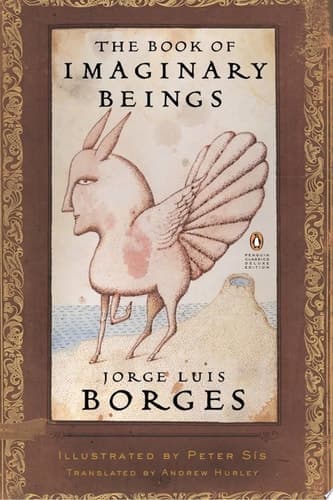
The Book of Imaginary Beings (Penguin Classics Deluxe Edition)
Jorge Luis BorgesPublished2006
Pages256
Formatpaperback
PublisherPenguin
Synopsis
In a perfect pairing of talent, this volume blends twenty illustrations by Peter Sís with Jorge Luis Borges's 1957 compilation of 116 "strange creatures conceived through time and space by the human imagination," from dragons and centaurs to Lewis Carroll's Cheshire Cat and the Morlocks of H. G. Wells's The Time Machine. A lavish feast of exotica brought vividly to life with art commissioned specifically for this volume, The Book of Imaginary Beings will delight readers of classic fantasy as well as Borges's many admirers.
For more than seventy years, Penguin has been the leading publisher of classic literature in the English-speaking world. With more than 1,700 titles, Penguin Classics represents a global bookshelf of the best works throughout history and across genres and disciplines. Readers trust the series to provide authoritative texts enhanced by introductions and notes by distinguished scholars and contemporary authors, as well as up-to-date translations by award-winning translators.
Recommendations
Generating recommendations…
Our AI is preparing recommendations for The Book of Imaginary Beings (Penguin Classics Deluxe Edition). This usually takes under a minute.
About Jorge Luis Borges
J
Jorge Luis Borges
1899–1986
Jorge Francisco Isidoro Luis Borges (Buenos Aires, 24 de agosto de 1899 - Ginebra, 14 de junio de 1986), más conocido como Jorge Luis Borges, fue un destacado escritor de cuentos, poemas y ensayos argentino, extensamente considerado una figura clave tanto para la literatura en habla hispana como para la literatura universal. También fue bibliotecario, profesor, conferencista y traductor. Sus dos libros más conocidos, *Ficciones* y *El Aleph,* publicados en los años cuarenta, son recopilaciones de cuentos conectados por temas comunes de forma fantástica, como los sueños, los laberintos, las bibliotecas, los espejos, los autores ficticios y las mitologías europeas (como la griega y la nórdica), con argumentos que exploran ideas filosóficas relacionadas, por ejemplo, con la memoria, la eternidad, la posmodernidad y la metaficción. Las obras de Borges han contribuido ampliamente a la literatura filosófica, al género fantástico y al posestructuralismo. Según marcan numerosos críticos, el comienzo del realismo mágico en la literatura hispanoamericana del siglo XX se debe en gran parte a su obra.
View author page