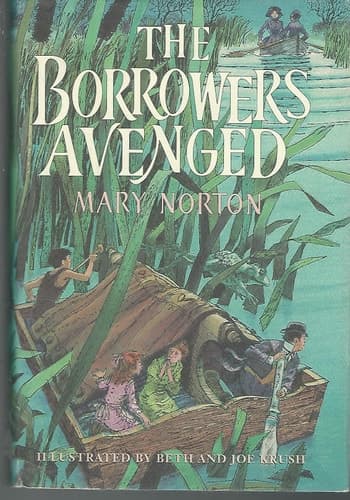
The Borrowers Avenged
Mary NortonPublished1982
Pages304
Formathardcover
PublisherHarcourt Children's Books
Synopsis
Pod, Homily, and Arrietty escape from the Platters attic and set off to an old rectory to begin life anew. Like her Borrowers, the author is resourceful, inventive, and patient, and her fantasy continues to be totally real and acceptable.--The Horn Book
Recommendations
The Minpins
by Roald Dahl
Dahl shares Norton's gift for making the miniature world feel utterly tactile and consequential—here, tiny people living in trees face genuine peril that matters deeply despite their size. Where Norton builds her fantasy through patient accumulation of domestic detail, Dahl does it through vivid sensory language and genuine stakes, but both authors treat their small characters with complete seriousness.
View book
The Box of Delights (Kay Harker)
by John Masefield
Published in 1935, this gives you a different era's approach to magical adventure—Masefield uses time-travel and transformation rather than miniaturization, but shares Norton's belief that wonder operates through specific, believable rules that characters must learn and navigate. The sense of resourcefulness under constraint feels very Borrowers-like, even as the scope expands beyond a single household.
View book
Howl's Moving Castle
by Diana Wynne Jones
Jones writes fantasy the way Norton does—with intricate, lived-in worlds where magic is treated as a practical problem to solve rather than a source of easy answers. Sophie's journey from ordinary to extraordinary mirrors Arrietty's, but Jones adds a layer of dry humor and genuine emotional complexity that deepens rather than undercuts the adventure.
View book
The Goblin Reservation
by Clifford D. Simak
Here's your genre-bending pick: Simak writes science fiction, but this 1968 novel treats goblins, elves, and magical creatures as a practical conservation problem—blending speculative worldbuilding with the same matter-of-fact tone Norton uses for borrowing. It's whimsical without being cute, and explores what happens when different species must coexist and negotiate shared spaces.
View book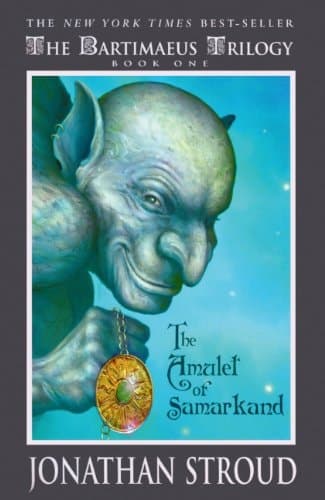
Bartimaeus: Amulet of Samarkand, The (Book One)
by Jonathan Stroud
Stroud builds his London with the same architectural specificity Norton uses—you can map the borrowers' world, just as you can trace Nathaniel's movements through this city. Both authors create fantasy through accumulation of concrete detail rather than exposition, and both feature young protagonists who must use intelligence and preparation rather than inherited power to survive.
View bookAbout Mary Norton
M
Mary Norton
1903–1992
Mary Norton, née Pearson, was a British children's author. Her books include *The Borrowers* series.
View author page