Synopsis
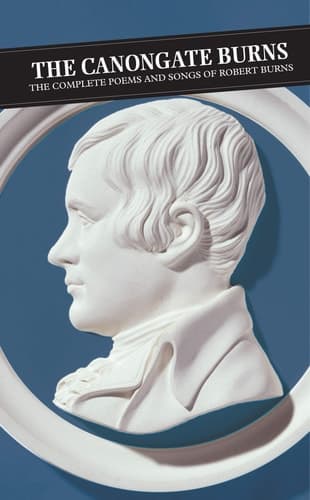
Drawing on extensive scholarship and the poet's own inimitable letters, this edition offers a wealth of information on Burns's life, the hardships of his early days, his political beliefs, his hatred of injustice, and his fate as a writer too often sentimentalized by biographers and critics. Through his poetry, and as if for the first time, we see Burns as a radical figure in a British as well as a Scottish context, the peer of Blake, Wordsworth, Coleridge, Keats, and Byron in the revolutionary and repressive world of the 1790s. Containing recently attributed and never-before-published poems demonstrating that the poet's political sympathies were more radical than he could safely put his name to in public, The Canongate Burns also includes the sexually scandalous verses known as "The Merry Muses," originally circulated only in handwritten copies. This major and definitive edition offers vitally fresh insights into the irreverent spirit and the democratic convictions of Scotland's greatest poet. "A magnificent and definitive work of scholarship." -- Colm Toibin, The Independent "The Canongate Burns is a very fine edition, and the long introduction ... is alone worth the cover price." -- Andrew O'Hagan, The Scotsman "This scholarly and comprehensive edition of his poems puts those much-loved fragments of wit and whimsy in their full context." -- The Sunday Telegraph
Recommendations
Generating recommendations…
Our AI is preparing recommendations for The Canongate Burns. This usually takes under a minute.
About Robert Burns
R
Robert Burns
1759–1796
Robert Burns (also known as Rabbie Burns, Scotland's favourite son, the Ploughman Poet, the Bard of Ayrshire and in Scotland as simply The Bard) was a Scottish poet and a lyricist. He is widely regarded as the national poet of Scotland, and is celebrated worldwide. He is the best known of the poets who have written in the Scots language, although much of his writing is also in English and a "light" Scots dialect, accessible to an audience beyond Scotland. He also wrote in standard English, and in these pieces, his political or civil commentary is often at its most blunt. He is regarded as a pioneer of the Romantic movement and after his death became a great source of inspiration to the founders of both liberalism and socialism. A cultural icon in Scotland and among the Scottish Diaspora around the world, celebration of his life and work became almost a national charismatic cult during the 19th and 20th centuries, and his influence has long been strong on Scottish literature. In 2009 he was voted by the Scottish public as being the Greatest Scot, through a vote run by Scottish television channel STV. ([Source][1]) [1]: http://en.wikipedia.org/wiki/Robert_Burns
View author page