Synopsis
The founding work of Gothic fiction
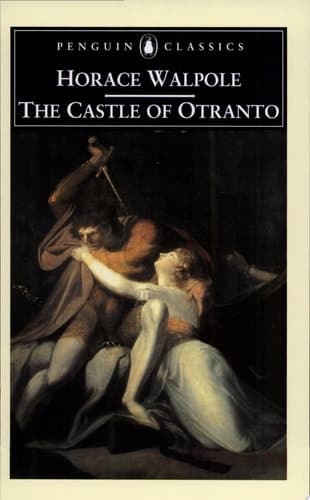
On the day of his wedding, Conrad, heir to the house of Otranto, is killed in mysterious circumstances. His calculating father Manfred fears that his dynasty will now come to an end and determines to marry his son's bride himself - despite the fact he is already married. But a series of terrifying supernatural omens soon threaten this unlawful union, as the curse placed on Manfred's ancestor, who usurped the lawful Prince of Otranto, begins to unfold. First published pseudonymously in 1764, purporting to be an ancient Italian text from the time of the crusades, The Castle of Otranto is a founding work of Gothic fiction. With its compelling blend of sinister portents, tempestuous passions and ghostly visitations, it spawned an entire literary tradition and influenced such writers as Ann Radcliffe and Bram Stoker.
For more than seventy years, Penguin has been the leading publisher of classic literature in the English-speaking world. With more than 1,700 titles, Penguin Classics represents a global bookshelf of the best works throughout history and across genres and disciplines. Readers trust the series to provide authoritative texts enhanced by introductions and notes by distinguished scholars and contemporary authors, as well as up-to-date translations by award-winning translators.
Recommendations
Generating recommendations…
Our AI is preparing recommendations for The Castle of Otranto. This usually takes under a minute.
About Horace Walpole
H
Horace Walpole
1717–1797
Horatio Walpole, 4th Earl of Orford (24 September 1717 – 2 March 1797), also known as Horace Walpole, was an English writer, art historian, man of letters, antiquarian and Whig politician. He had Strawberry Hill House built in Twickenham, south-west London, reviving the Gothic style some decades before his Victorian successors. His literary reputation rests on the first Gothic novel, *The Castle of Otranto* (1764), and his Letters, which are of significant social and political interest. They have been published by Yale University Press in 48 volumes. He was the son of the first British Prime Minister, Sir Robert Walpole. As Horace Walpole was childless, on his death his barony of Walpole descended to his cousin of the same surname, who was created the new Earl of Orford. **Source**: [Horace Walpole](https://en.wikipedia.org/wiki/Horace_Walpole) on Wikipedia.
View author page