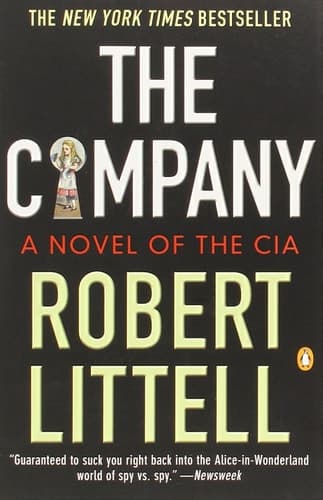
The Company A Novel of the CIA
Robert LittellPublished2003
Pages894
Formatpaperback
PublisherPenguin Books
Synopsis
For readers enthralled by the phrase walking back the cat (also the title of one of Littell's previous thrillers), this hefty tome will be nirvana. Littell, whose spy thrillers have ensnared readers since 1973's The Defection of A.J. Lewinter, here turns his literary eye and rapier-sharp mind on the Central Intelligence Agency. Starting during the Berlin years in the deep freeze of the Cold War, Littell follows two generations of agents and administrators right up through the 1995 mole episode. He devotes one gut-wrenching segment to the CIA's efforts in Afghanistan in 1983, which will have heightened significance for today's readers. Using historic figures amplified by artfully drawn figments of his abundant imagination, Littell also dramatizes the internal feuds and cutbacks that left the CIA, already vulnerable on the moral knife edge of espionage, barely able to meet the challenges of a changing world. Gathering its power slowly, the novel accelerates as events become more and more familiar and current. This is a work of fiction, yet its scholarship and analysis are outstanding. Littell avoids the didactic in favor of wit, irony, and ambiguity. A sure winner for libraries of all types.
Recommendations
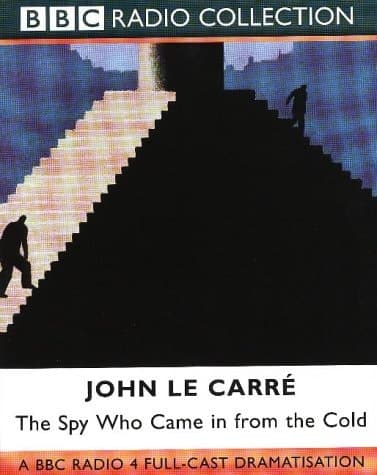
The Spy who Came in from the Cold Cassette Pack
by John Le Carré (Schriftsteller)
Le Carré shares Littell's gift for depicting espionage as a morally corrosive enterprise where idealism gets ground down by bureaucracy and compromise. Where Littell spans decades to show institutional decay, le Carré focuses his lens tightly on a single operation to reveal how the machinery of intelligence work corrupts everyone it touches—but with a bleaker, more austere prose style that makes the cynicism feel earned rather than performed.
View book
The Billion Dollar Sure Thing
by Paul E. Erdman
This is narrative nonfiction that reads with the propulsive momentum of Littell's novel—it's the true story of a Soviet colonel who became the CIA's most valuable asset during the 1980s. You'll recognize the Afghanistan context Littell dramatized, but Hoffman's meticulous research and novelistic pacing give you the real thing: the tradecraft, the paranoia, the impossible choices that actual agents faced. It's your bridge from Littell's fiction back to the historical record he was interpreting.
View book
The Apocalyptic Vision of Mikhail Bulgakov's the Master and Margarita (Studies in Slavic Language & Literature)
by Edward E. Ericson
Here's the surprise: this 1960s Russian novel operates in a completely different register from Littell, yet it's obsessed with many of the same questions about power, surveillance, and how totalitarian systems corrupt art and truth. Where Littell gives you the CIA's institutional perspective, Bulgakov gives you the Soviet experience of living under a system where reality itself becomes negotiable. The magical realism isn't escapism—it's the only honest way to describe life under constant ideological pressure.
View book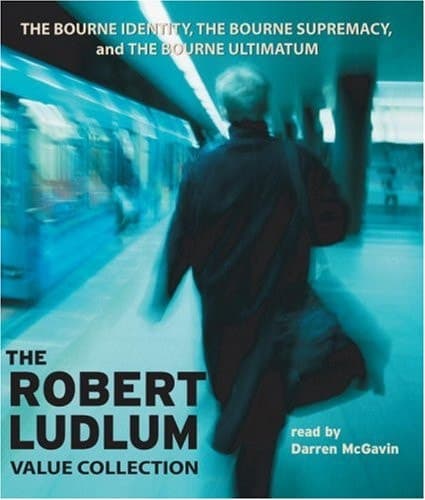
The Robert Ludlum Value Collection: The Bourne Identity, The Bourne Supremacy, The Bourne Ultimatum
by Robert Ludlum
Ludlum shares Littell's conviction that spy fiction should be intellectually rigorous, not just kinetic—his protagonist's amnesia forces him to reconstruct identity the way readers reconstruct meaning from fragmented intelligence. Where Littell builds suspense through historical accumulation and institutional detail, Ludlum does it through psychological disorientation and the protagonist's desperate need to know who he really is. Both writers treat espionage as fundamentally about epistemology: what can you actually know?
View bookAbout Robert Littell
R
Robert Littell
Born 1935
Biography coming soon.
View author page