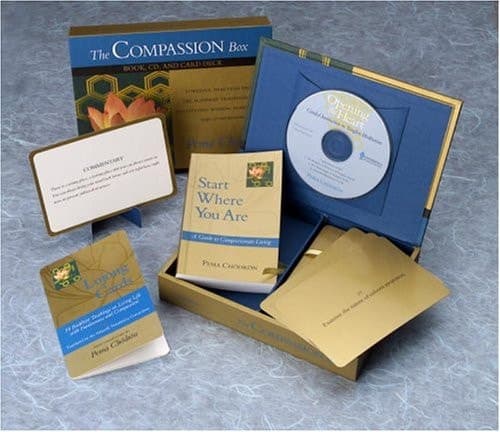
The Compassion Box Book, CD, and Card Deck
Pema ChödrönPublished2003
Pages288
FormatMisc. Supplies
PublisherShambhala Publications, Incorporated
Synopsis
For many centuries Tibetan Buddhists have used a traditional collection of pithy, penetrating slogans to help them develop equanimity, intelligence, and compassion amid the turbulence of daily life. This boxed set presents all the tools needed to learn this transformative practice (called lojong in Tibetan), presented in Pema's accessible, down-to-earth style.
The Compassion Box contains a set of finely produced cards presenting fifty-nine powerful maxims, including "Don't be swayed by external circumstances," "Don't be so predictable," and "Be grateful to everyone." The cards can be displayed at work or home for guidance and inspiration throughout the day. On the reverse side of each card Pema offers new, illuminating, and inspiring commentary on how to understand and apply the maxims.
The Compassion Box includes:
• 59 two-color cards, with a Buddhist slogan on one side and original commentary by Pema Chödrön on the other
• Guided instructions on how to use the cards as part of a daily spiritual practice
• A fold-out card stand
• A 288-page paperback, Start Where You Are: A Guide to Compassionate Living, a popular guide to understanding and applying the slogans
• A 45-minute audio CD of Pema Chödrön offering in-depth instruction on tonglen meditation ("taking in and sending out"), a powerful practice that anyone can undertake to awaken the heart
Recommendations
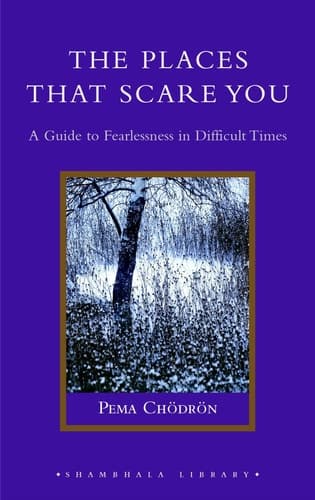
The Places That Scare You A Guide to Fearlessness in Difficult Times
by Pema Chödrön
Wait—I know you just finished Pema, but hear me out. Where *Compassion Box* gives you the slogans and daily practice framework, this book goes deeper into the *why* behind working with fear and resistance. It's like having a conversation with Pema about the obstacles you'll actually encounter when you try to live by those fifty-nine maxims. Think of it as the companion volume that explains the emotional architecture underneath the practice.
View book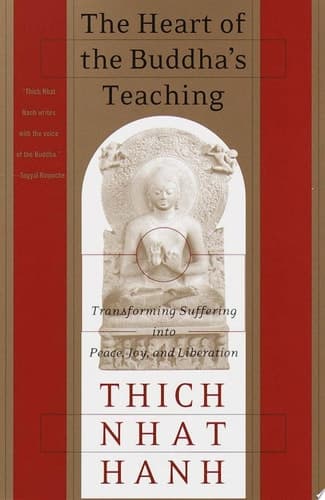
The Heart of the Buddha's Teaching Transforming Suffering into Peace, Joy, and Liberation
by Thich Nhat Hanh
Thich Nhat Hanh teaches the same Buddhist fundamentals as Pema but through a completely different lens—where Pema emphasizes working with chaos and unpredictability, Thich Nhat Hanh shows you how to find peace through mindful presence in ordinary moments. His writing has an almost poetic gentleness that complements Pema's more direct, sometimes provocative style. You'll recognize the core teachings, but experienced through a different temperament.
View book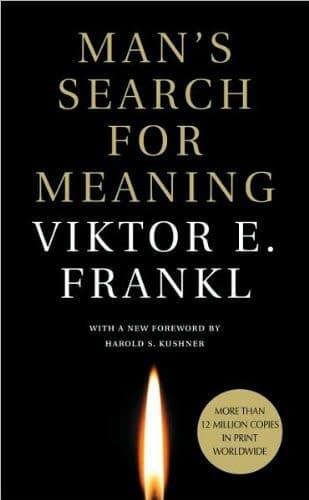
Man's Search for Meaning
by Viktor E. Frankl
This is my surprise pick, and here's why it matters: Frankl spent years in Nazi concentration camps and emerged with a philosophy about finding purpose even in unbearable circumstances—which is essentially what lojong practice is about, just without the Buddhist framework. Where Pema gives you tools to work with difficulty, Frankl gives you the existential *why* those tools matter. It's shorter than you'd expect and reads almost like a spiritual memoir, not a self-help book.
View book
Voyage to the Sonorous Land, Or, The Art of Asking ; And, The Hour We Knew Nothing of Each Other
by Peter Handke
Palmer's memoir about vulnerability and connection might seem like an odd follow-up to Buddhist practice, but she's essentially writing about the same thing Pema teaches through tonglen—the radical act of being open, asking for help, and recognizing our interdependence. Her voice is irreverent and contemporary where Pema is contemplative, but both are asking: what happens when you stop protecting yourself and actually let people in? It's spirituality for people who don't use the word 'spirituality.'
View bookAbout Pema Chödrön
Biography coming soon.
View author page