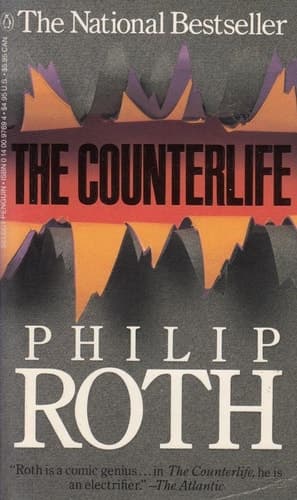
Synopsis
The Counterlife is about people enacting their dreams of renewal and escape, some of them going so far as to risk their lives to alter seemingly irreversible destinies. Wherever they may find themselves, the characters of The Counterlife are tempted unceasingly by the prospect of an alternative existence that can reverse their fate.
Illuminating these lives in transition and guiding us through the book's evocative landscapes, familiar and foreign, is the miind of the novelist Nathan Zuckerman. His is the skeptical, enveloping intelligence that calculates the price that's paid in the struggle to change personal fortune and reshape history, whether in a dentist's office in suburban New Jersey, or in a tradition-bound English Village in Gloucestershire, or in a church in London's West End, or in a tiny desert settlement in Israel's occupied West Bank.
Recommendations
Generating recommendations…
Our AI is preparing recommendations for The Counterlife. This usually takes under a minute.
About Philip Roth
P
Philip Roth
1933–2018
Philip Milton Roth (March 19, 1933 – May 22, 2018) was an American novelist and short-story writer. Roth's fiction—often set in his birthplace of Newark, New Jersey—is known for its intensely autobiographical character, for philosophically and formally blurring the distinction between reality and fiction, for its "sensual, ingenious style" and for its provocative explorations of Jewish and American identity. He first gained attention with the 1959 short story collection *Goodbye, Columbus,* which won the U.S. National Book Award for Fiction. Ten years later, he published the bestseller *Portnoy's Complaint.* Nathan Zuckerman, Roth's literary alter ego, narrates several of his books. A fictionalized Roth narrates some of his others, such as the alternate history *The Plot Against America.*
View author page