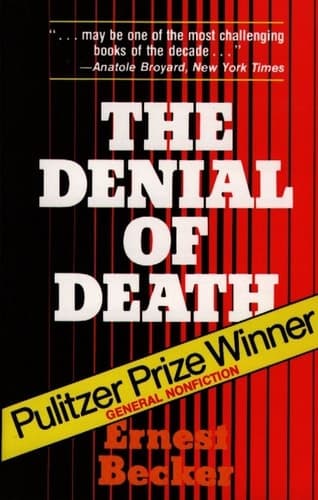
Synopsis
Drawing from religion and the human sciences, particularly psychology after Freud, the author attempts to demonstrate that the fear of death is man's central concern.
Recommendations
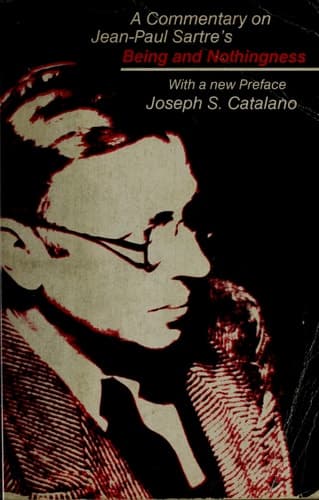
A Commentary on Jean-Paul Sartre's Being and Nothingness
by Joseph S. Catalano
Where Becker uses psychology to examine death anxiety, Sartre approaches the same existential dread through philosophy—but with a crucial difference: he argues we're radically free to create meaning despite that void. You'll find the same intellectual rigor and unflinching look at human consciousness, but Sartre offers a more active, almost defiant response to the absurd.
View book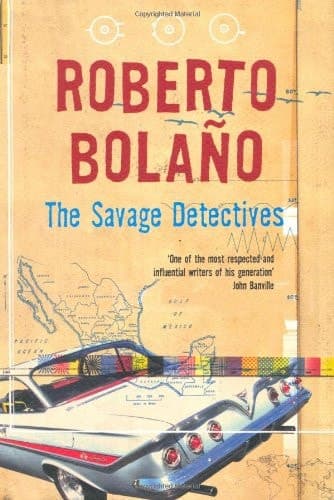
The Savage Detectives A Novel
by Roberto Bolaño
This might seem like a left turn—it's a sprawling, fragmented novel about poets rather than a psychology text—but Bolaño is obsessed with the same question Becker circles: how do we construct identity and meaning when we know we're mortal? The book's structure itself enacts the anxiety of trying to hold a self together against time's dissolution. It's Becker's thesis as experimental fiction.
View book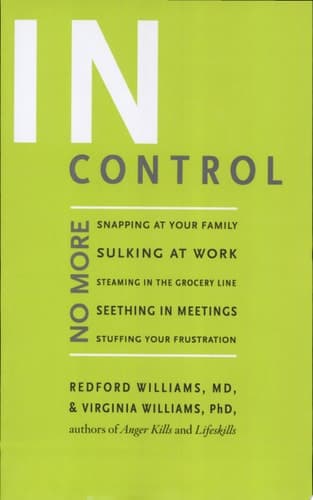
In Control No More Snapping at Your Family, Sulking at Work, Steaming in the Grocery Line, Seething in Meetings, Stuffing Your Frustration
by Redford Williams
Solomon was actually part of the research team that built on Becker's Terror Management Theory, so this is Becker's intellectual legacy brought into the 21st century with empirical studies. Rather than theoretical argument, you get decades of psychological experiments showing exactly how humans defend against death awareness in their daily behavior—it's like watching Becker's ideas tested in real time.
View book
The Apocalyptic Vision of Mikhail Bulgakov's the Master and Margarita (Studies in Slavic Language & Literature)
by Edward E. Ericson
A Soviet-era novel that uses satire and magical realism to explore how humans create false immortalities—through art, ideology, love, and delusion. Bulgakov doesn't argue about death the way Becker does; instead he shows characters desperately constructing meaning systems to deny it, which makes Becker's thesis visceral rather than abstract. The Devil himself becomes a character who understands human nature better than anyone.
View book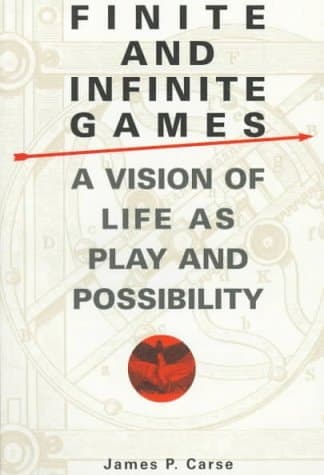
Finite and Infinite Games
by James P. Carse
Carse offers a deceptively simple framework—some games are played to win (and end), others to keep playing indefinitely—that reframes how we construct meaning and avoid death awareness. It's aphoristic and meditative where Becker is argumentative, but both are asking: what are the psychological structures we build to cope with finitude? This one feels like a conversation partner rather than a repetition.
View bookAbout Ernest Becker
E
Ernest Becker
1924–1974
Biography coming soon.
View author page