The Divine Comedy of Dante Alighieri Inferno
Dante AlighieriPublished1981
Pages432
Formathardcover
PublisherOxford University Press
Synopsis
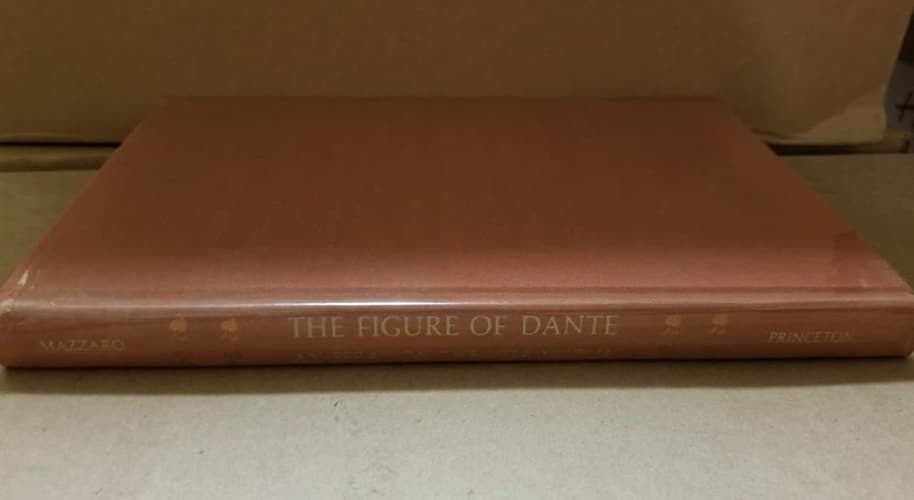
Jerome Mazzaro examines Dante's Vita Nuova as an artistic correlative to what Dante conceived as an image of himself. Specifically, he explores the structure of the work in relation to medieval views of memory, self, music, form, and interpretation, and against the facts of Dante's life and culture as we have come to know them.
Originally published in 1981.
The Princeton Legacy Library uses the latest print-on-demand technology to again make available previously out-of-print books from the distinguished backlist of Princeton University Press. These editions preserve the original texts of these important books while presenting them in durable paperback and hardcover editions. The goal of the Princeton Legacy Library is to vastly increase access to the rich scholarly heritage found in the thousands of books published by Princeton University Press since its founding in 1905.
Recommendations
Generating recommendations…
Our AI is preparing recommendations for The Divine Comedy of Dante Alighieri Inferno. This usually takes under a minute.
About Dante Alighieri
D
Dante Alighieri
1265–1321
Dante was an Italian poet of the Middle Ages. The name Dante is, according to the words of Jacopo Alighieri, a hypocorism for Durante. In contemporary documents it is followed by the patronymic Alagherii or de Alagheriis; it was Boccaccio who popularized the form Alighieri. ([Source][1].) [1]:http://en.wikipedia.org/wiki/Dante_Alighieri Painter of this picture of Dante is Sandro Botticelli, See the new edition of the comedy published by Ateliê Editorial of São Paulo, Brazil, trabslation in verso terza rima complete by João Trentino Ziller
View author page