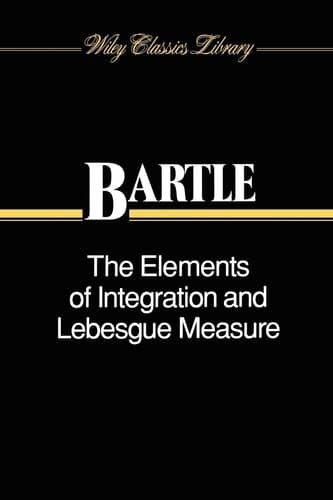
The Elements of Integration and Lebesgue Measure
Robert G. BartlePublished1995
Pages192
Formatpaperback
PublisherWiley-Interscience
Synopsis
Consists of two separate but closely related parts. Originally published in 1966, the first section deals with elements of integration and has been updated and corrected. The latter half details the main concepts of Lebesgue measure and uses the abstract measure space approach of the Lebesgue integral because it strikes directly at the most important results―the convergence theorems.
Recommendations
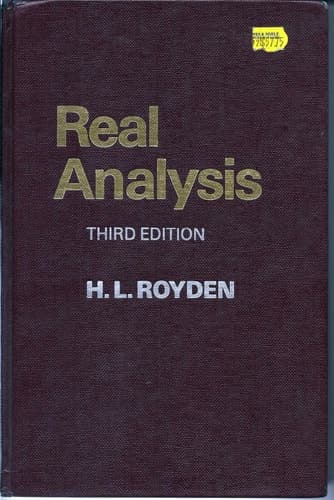
Real Analysis, 3rd Edition
by Halsey Royden
Royden takes the same rigorous journey through measure theory and integration that Bartle does, but with a distinctly different pedagogical voice—where Bartle is precise and economical, Royden is more conversational and often includes intuitive motivation before diving into abstraction. If you found yourself wanting to see the 'why' behind Bartle's theorems from another angle, this companion volume will deepen your understanding without feeling repetitive.
View book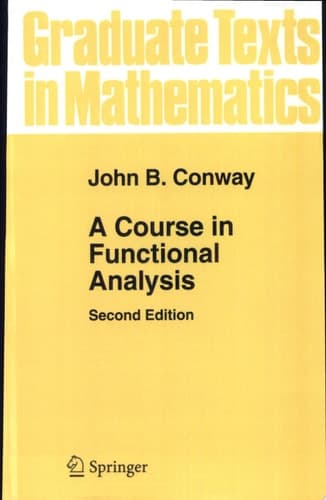
A Course in Functional Analysis
by John B. Conway
Conway builds naturally from the measure-theoretic foundations you've just mastered and shows you where they lead—into the broader landscape of functional analysis. His treatment of Banach and Hilbert spaces assumes exactly the kind of comfort with abstract measure spaces that Bartle develops, making this feel like the natural next chapter rather than a restart.
View book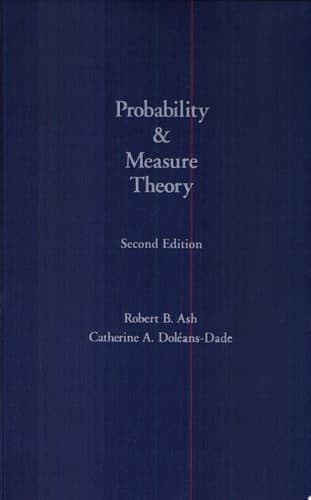
Probability and Measure Theory
by Robert B. Ash
Here's where your measure theory suddenly becomes *useful* in a way that pure mathematics alone doesn't always reveal. Billingsley shows how the Lebesgue integral and abstract measure spaces aren't just elegant abstractions—they're the essential language for probability theory. The book reads almost like a translation manual, taking everything you've learned and showing its real-world mathematical applications.
View book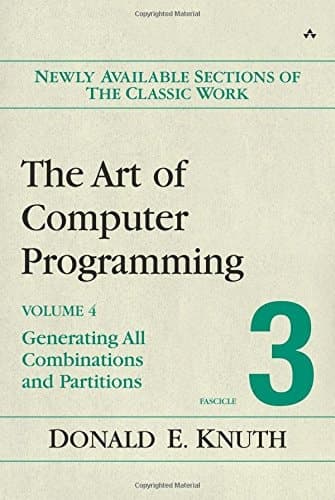
The Art of Computer Programming
by Donald Ervin Knuth
This might seem like a left turn, but stay with me: Knuth's meticulous, almost obsessive approach to mathematical rigor in algorithm design mirrors Bartle's philosophy exactly. Where Bartle insists on getting the foundations of integration *right*, Knuth insists on understanding computational fundamentals at the deepest level. Both authors write for readers who want to understand *why*, not just *how*—and both reward that patience with genuine insight.
View book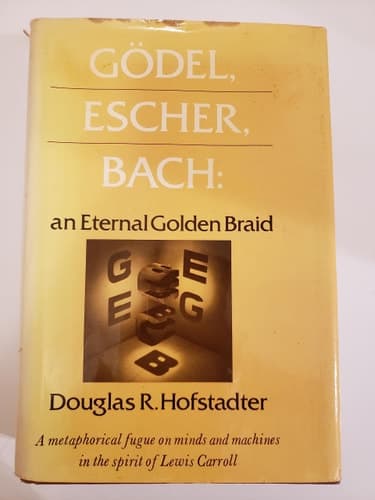
Gödel, Escher, Bach An Eternal Golden Braid
by Douglas R. Hofstadter
A genuine surprise, but here's the connection: both Bartle and Hofstadter are obsessed with the deep structure underlying their domains—one in measure theory, one in consciousness and mathematics itself. Hofstadter's playful dialogues and recursive patterns might seem worlds away from Bartle's austere theorems, but both books share a conviction that understanding requires you to sit with abstraction until it becomes intuitive. If you loved the moment when Lebesgue measure suddenly *clicked*, you'll recognize that same satisfaction when Hofstadter's strange loops finally resolve.
View bookAbout Robert G. Bartle
R
Robert G. Bartle
Born 1927
Biography coming soon.
View author page