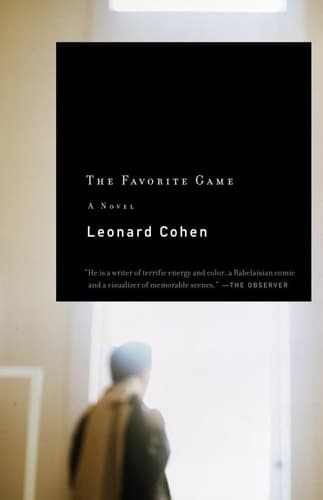
Synopsis
In this unforgettable novel, Leonard Cohen boldly etches the youth and early manhood of Lawrence Breavman, only son of an old Jewish family in Montreal.
Life for Breavman is made up of dazzling colour—a series of motion pictures fed through a high-speed projector: the half-understood death of his father; the adult games of love and war, with their infinite capacity for fantasy and cruelty; his secret experiments with hypnotism; the night-long adventures with Krantz, his beloved comrade and confidant. Later, achieving literary fame as a college student, Breavman does penance through manual labour, but ultimately flees to New York. And although he has loved the bodies of many women, it is only when he meets Shell, whom he awakens to her own beauty, that he discovers the totality of love and its demands, and comes to terms with the sacrifices he must make.
Recommendations

Beautiful Losers
by Leonard Cohen
Wait—I know what you're thinking. But Cohen's second novel operates in an entirely different register from *The Favorite Game*. Where Breavman's story unfolds with lyrical clarity, *Beautiful Losers* fractures into multiple voices and timelines, layering erotic obsession with historical tragedy and spiritual searching. If you loved Cohen's poetic sensibility in the first novel, this one deepens it into something more experimental and demanding.
View book
The Apocalyptic Vision of Mikhail Bulgakov's the Master and Margarita (Studies in Slavic Language & Literature)
by Edward E. Ericson
Bulgakov's masterpiece shares Cohen's gift for weaving the mundane and the mythic—a young writer's creative crisis and impossible love affair runs parallel to a devil's visit to Soviet Moscow. Like Breavman, the protagonist grapples with artistic ambition, sensuality, and what it means to sacrifice for love, but Bulgakov adds a layer of dark comedy and metaphysical stakes that transforms the intimate into the cosmic.
View book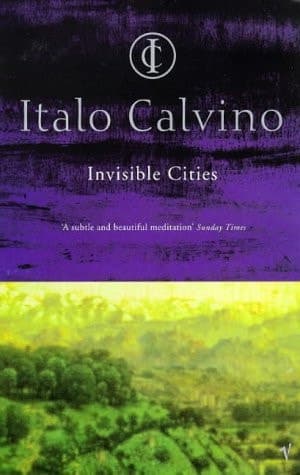
Invisible Cities
by Italo Calvino
This is the surprise pick. Rather than following a linear narrative like *The Favorite Game*, Calvino constructs a series of imagined cities described by Marco Polo to Kublai Khan—each one a meditation on desire, memory, and connection. It shares Cohen's lyrical intensity and his fascination with how we construct meaning through fantasy, but does it through architectural and sensory description rather than psychological realism. You'll find the same erotic charge and philosophical questioning, just refracted through an entirely different form.
View book
Die Wiederkehr der Zeichen: Eine psychoanalytische Studie zu Knut Hamsuns «Hunger» (Texte und Untersuchungen zur Germanistik und Skandinavistik) (German Edition)
by Thomas Fechner-Smarsly
Hamsun's 1890 novel predates Cohen's work by nearly a century, but it's the spiritual ancestor of *The Favorite Game*'s psychological intensity. His unnamed protagonist is a young man adrift in Oslo, cycling through relationships, creative ambitions, and self-deception with the same feverish energy as Breavman. Hamsun's prose has that same quality of immediate, almost hallucinatory intimacy—you're inside a consciousness that's brilliant, manipulative, and deeply unreliable.
View bookAbout Leonard Cohen
L
Leonard Cohen
1934–2016
Canadian poet and singer-songwriter
View author page