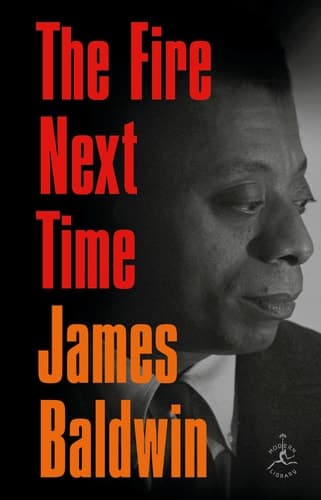
The Fire Next Time
James BaldwinPublished2021
Pages112
Formathardcover
PublisherRandom House Publishing Group
Synopsis
A stirring, intimate reflection on the nature of race and American nationhood that has inspired generations of writers and thinkers, first published in 1963, the same year as the March on Washington
“The finest essay I’ve ever read.”—Ta-Nehisi Coates, #1 New York Times bestselling author of the National Book Award winner Between the World and Me
With clarity, conviction, and passion, James Baldwin delivers a dire warning of the effects of racism that remains urgent nearly sixty years after its original publication.
In the first of two essays, “My Dungeon Shook: Letter to My Nephew on the One Hundredth Anniversary of the Emancipation,” Baldwin offers kind and unflinching counsel on what it means to be Black in the United States and explains the twisted logic of American racism.
In “Down at the Cross: Letter from a Region in My Mind,” Baldwin recounts his spiritual journey into the church after a religious crisis at the age of fourteen, and then back out of it again, as well as his meeting with Elijah Muhammad, the leader of the Nation of Islam. Throughout, Baldwin urges us to confront the oppressive institutions of race, religion, and nationhood itself, and insists that shared resilience among both Black and white people is the only way forward. As much as it is a reckoning with America’s racist past, The Fire Next Time is also a clarion call to care, courage, and love, and a candle to light the way.
Recommendations
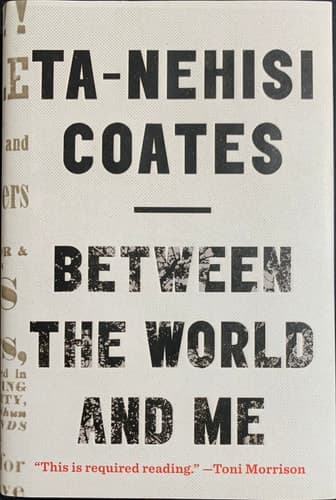
Between the World and Me
by Ta-Nehisi Coates
Coates explicitly credits Baldwin as his literary north star, and this book extends Baldwin's meditation on Black identity into the 21st century through the intimate form of a letter to his son. Where Baldwin writes with prophetic urgency about what America must confront, Coates writes with the hard-won clarity of someone living in the world Baldwin warned about—the result is a conversation across generations that deepens both texts.
View book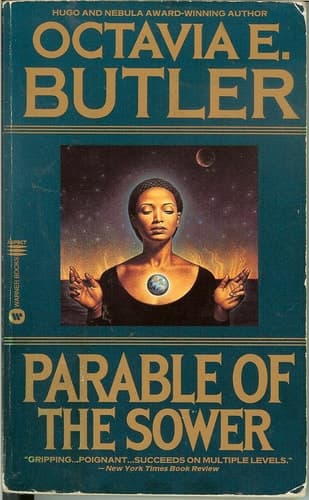
Parable of the Sower
by Octavia E. Butler
This 1993 novel does something Baldwin's essays do philosophically—it imagines what happens when a society fails to heed warnings about inequality and fracture. Butler's protagonist develops a spiritual philosophy in response to systemic collapse, echoing Baldwin's insistence that resilience and reimagined community are survival tools. It's speculative fiction, yes, but grounded in the same unflinching analysis of American institutions that Baldwin demands.
View book
Notes of a native son
by James Baldwin
Lorde's essay collection shares Baldwin's genre—the personal essay as political weapon—but her voice is distinctly her own: angrier, more theoretically rigorous about intersectionality, and less interested in appealing to white readers' capacity for change. If Baldwin's fire is a warning, Lorde's is a forge. Reading them together shows you two different strategies for the same urgent work.
View book
The Souls of Black Folk and Clotel By W.E.B. Du Bois
by DuBois Blight Gooding Bro
Published in 1903, this collection predates Baldwin by sixty years but haunts every page of *The Fire Next Time*—Baldwin is in dialogue with Du Bois's concept of 'double consciousness' and his insistence that Black Americans must see themselves through both their own eyes and America's distorting gaze. Reading Du Bois first (or after) shows you the genealogy of Baldwin's thought and proves these arguments have been urgent for over a century.
View book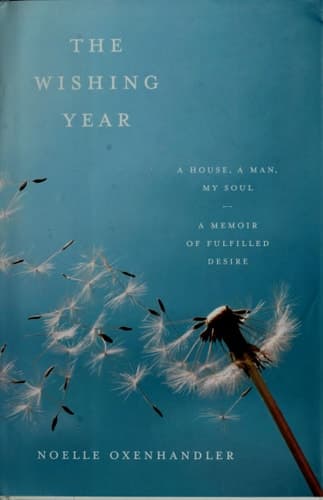
The Wishing Year A House, a Man, My Soul : a Memoir of Fulfilled Desire
by Noelle Oxenhandler
This might seem like a left turn, but Moreno-Garcia uses the historical witch trials as a lens to examine how institutions (religious, patriarchal, colonial) criminalize resistance and non-conformity. It's Baldwin's analysis of how America manufactures enemies and justifies oppression, but told through gothic historical fiction instead of essay. The formal difference lets you see the same structural patterns in a new light.
View bookAbout James Baldwin
J
James Baldwin
1924–1987
James Arthur Baldwin was an American novelist, writer, playwright, poet, essayist and civil rights activist. Most of Baldwin's work deals with racial and sexual issues in the mid-20th century in the United States. His novels are notable for the personal way in which they explore questions of identity as well as the way in which they mine complex social and psychological pressures related to being black and homosexual well before the social, cultural or political equality of these groups was improved. Source and more information: https://en.wikipedia.org/wiki/James_Baldwin
View author page