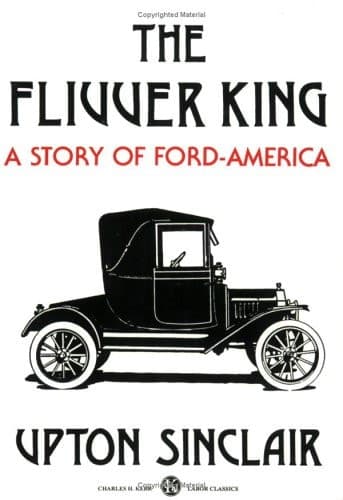
The Flivver King: A Story Of Ford-America
Upton SinclairPublished1984
Pages264
Formatpaperback
PublisherCharles H Kerr
Synopsis
Fiction. Facimilie reprint, available again from SPD. Fiftieth anniversary edition. Upton Sinclair's THE FLIVVER KING stands among the finest of modern American historical novels. Workers and bosses, flappers and Klansmen, war and depression, Prohibition outlaws and high-society parties, unions and anti-union gun thugs -- few aspects of American life in the first four decades of our century are missing from this small masterpiece. THE FLIVVER KING sustains the same sure grasp of working-class life which characterized Sinclair's earlier classic, THE JUNGLE, but with much less sentimentality and with a steadier focus on how alienated work breeds not only degradation but also resistance and revolt.
Recommendations

The Grapes of Wrath John Steinbeck
by John Steinbeck
Like Sinclair, Steinbeck captures the grinding machinery of American capitalism through working families caught in its gears, but he does it with a novelist's eye for landscape and sensory detail rather than polemics. Where *The Flivver King* traces industrial alienation through the assembly line, Steinbeck traces it through displacement and migration—same brutal system, different terrain, equally unflinching about who pays the cost.
View bookAbout Upton Sinclair
U
Upton Sinclair
1878–1968
Upton Sinclair, Jr., was a Pulitzer Prize-winning American author who wrote over 90 books in many genres. He achieved popularity in the first half of the 20th century, acquiring particular fame for his 1906 muckraking novel The Jungle. It exposed conditions in the U.S. meat packing industry, causing a public uproar that contributed in part to the passage a few months later of the 1906 Pure Food and Drug Act and the Meat Inspection Act. --Wikipedia
View author page