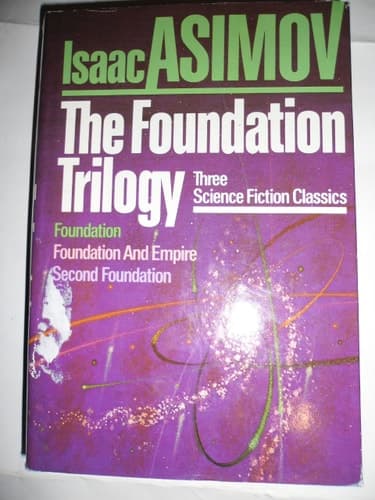
The Foundation Trilogy Three Science Fiction Classics
Isaac AsimovPublished1982
Pages679
Formathardcover
PublisherDoubleday
Synopsis
The Foundation, established after the Old Empire gives way to barbarism, fights against a mutant strain called the Mule and tries to get rid of the Second Foundation after learning it will inherit a future Empire.
Recommendations
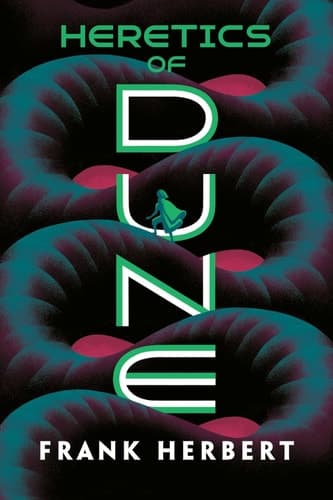
Heretics of Dune
by Frank Herbert
If you were captivated by Asimov's sweeping vision of galactic empires and the fate of civilization, Frank Herbert's Dune will transport you to another richly-imagined world. Like Foundation, it explores how politics, religion, and ecology intersect to shape the course of history on a grand scale.
View bookThe Italian Left in the Twentieth Century: A History of the Socialist and Communist Parties
The Italian Left in the Twentieth Century: A History of the Socialist and Communist Parties
by Alexander De Grand
Le Guin is a master at crafting alien societies that feel both foreign and familiar. In this standalone novel, she imagines a world where gender is fluid, challenging readers to question their assumptions about identity and humanity. If you were intrigued by the social commentary in Foundation, this book will give you a fresh perspective.
View book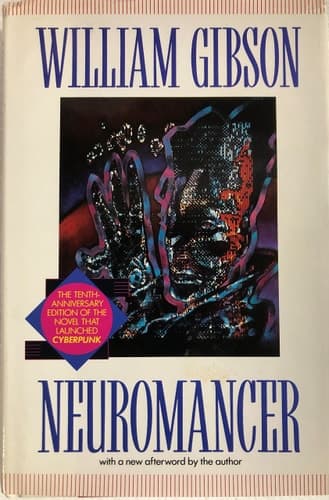
Neuromancer
by William Gibson
Gibson's cyberpunk classic shares Foundation's fascination with the interplay of technology, power, and the human condition. Like Asimov, he creates a vividly realized future world, but his style is more gritty and visceral. If you're looking for another epic tale that blends sci-fi, mystery, and philosophy, Neuromancer will pull you in.
View book
Food Chemicals Codex First supplement to the fifth edition
by Institute of Medicine
Jemisin's acclaimed Broken Earth series shares Foundation's ambitious scope, but with a more character-driven approach. Her worldbuilding is just as meticulous, but she uses it to explore themes of oppression, resilience, and the power of community. If you're in the mood for another sweeping sci-fi saga with a unique cultural perspective, this is a must-read.
View book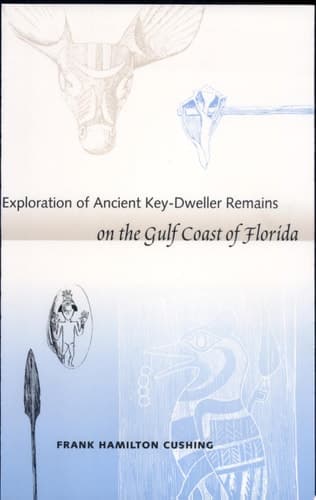
Exploration of Ancient Key-dweller Remains on the Gulf Coast of Florida
by Frank Hamilton Cushing
This may seem like an unexpected recommendation, but hear me out. Ishiguro's restrained, elegiac style has a similar effect to Asimov's - a sense of melancholy for a vanishing way of life. Like Foundation, The Remains of the Day grapples with the weight of history and the individual's place within larger social forces. If you appreciate nuanced character studies and subtle, thought-provoking narratives, this literary gem is well worth your time.
View bookAbout Isaac Asimov
I
Isaac Asimov
1920–1992
Asimov was born sometime between October 4, 1919 and January 2, 1920 in Petrovichi in Smolensk Oblast, RSFSR (now Russia), the son of a Jewish family of millers. Although his exact date of birth is uncertain, Asimov himself celebrated it on January 2. His family emigrated to Brooklyn, New York and opened a candy store when he was three years old. He taught himself to read at the age of five. He began reading the science fiction pulp magazines that his family's store carried. Around the age of eleven, he began to write his own stories, and by age nineteen, he was selling them to the science fiction magazines. He graduated from Columbia University in 1939. He married Gertrude Blugerman in 1942. During World War II he worked as a civilian at the Philadelphia Navy Yard's Naval Air Experimental Station. After the war, he returned to Columbia University and earned a Ph.D. in biochemistry in 1948. He then joined the faculty of the Boston University School of Medicine until 1958, when he became a full-time writer. His first novel, [Pebble in the Sky](https://openlibrary.org/works/OL46402W), was published in 1950. He and his wife divorced in 1973, and he married Janet O. Jeppson the same year. He was a highly prolific writer, having written or edited more than 500 books and an estimated 9,000 letters and postcards.
View author page