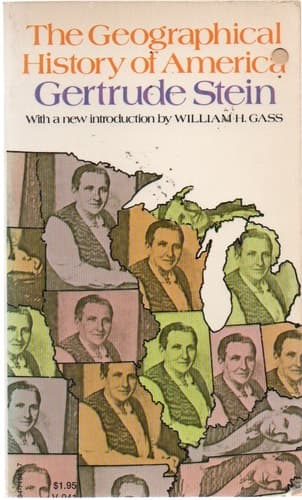
The geographical history of America;: Or, The relation of human nature to the human mind
Gertrude SteinPublished1973
Pages243
Formatpaperback
PublisherVintage Books
Synopsis
Geographical History also elaborates on Stein's concepts of identity, landscape, presence, and composition. Today, as literary discourse pays more attention to textuality; to voice, reader-response, and phenomenology, Stein emerges as a pioneering modernist to whom the century is slowly catching up. For those in the performing arts, Geographical History further addresses the notion of play as landscape, one of Stein's most influential theatrical ideas, as well as such issues as dialogue, character, and dramatic structure -- in a book that is itself a model of modern experimentation.
Recommendations
Generating recommendations…
Our AI is preparing recommendations for The geographical history of America;: Or, The relation of human nature to the human mind. This usually takes under a minute.
About Gertrude Stein
G
Gertrude Stein
1874–1946
Gertrude Stein was an American writer who spent most of her life in France, and who became a catalyst in the development of modern art and literature. Her life was marked by two primary relationships, the first with her brother Leo Stein, from 1874-1914 (Gertrude and Leo), and the second with her partner Alice B. Toklas, from 1907 until Stein's death in 1946 (Gertrude and Alice). Stein shared her salon at 27 rue de Fleurus, Paris, first with Leo and then with Alice. Throughout her lifetime, Stein also cultivated significant relationships with well-known members of the avant garde artistic and literary world. ([Source][1].) [1]:http://en.wikipedia.org/wiki/Gertrude_Stein
View author page